Butterr Review: What You Are Actually Paying For, Layer by Layer

On This Page
- The Four Layers of the Price
- The Six Dollars Nobody Explains
- Why You Should Buy One Spare Cover, Not Three
- What Is Actually Inside It
- One Thing to Check Before You Order
- The Certifications, Which Are Real
- The Rest of the Range
- The Safety Point That Applies to Every Brand
- Final Verdict
- FAQs
- How much is a Butterr nursing pillow?
- Why do some colours cost more?
- What is the Butterr pillow filled with?
- Is it certified?
- Do I need a spare cover?
- Can a baby sleep on a nursing pillow?
A nursing pillow is a simple object, so a $122 one needs to explain itself. This Butterr review takes the price apart layer by layer to see where the money goes.
Two of those layers are genuinely well justified. One of them is not explained anywhere on the site.
The Four Layers of the Price
What you are paying for | Cost | Note |
|---|---|---|
The pillow, cheaper colours | $116 | Blush, Earth, Ginger, Natural, Wheat |
The pillow, dearer colours | $122 | Birch, Chestnut, Fable, Mahogany, Sandstone |
A spare cover, cheaper colours | $42 | 36.2% of the pillow |
A spare cover, dearer colours | $48 | 39.3% of the pillow |
Pillow plus one spare cover | $158 to $170 | The realistic purchase |
$116 to $122 for the pillow, plus $42 to $48 for every spare cover.
The headline price is not the whole purchase. A nursing pillow gets covered in milk within the first week, so almost everybody ends up owning at least one spare cover.
That takes the realistic cost of entry to between $158 and $170 rather than the $116 on the listing.
The Six Dollars Nobody Explains
The colour premium | Figure |
|---|---|
Cheaper pillow colours | $116 |
Dearer pillow colours | $122 |
Difference | $6, or 5.2% |
On covers the same $6 is | 14.3% |
Reason given on the pages we read | None |
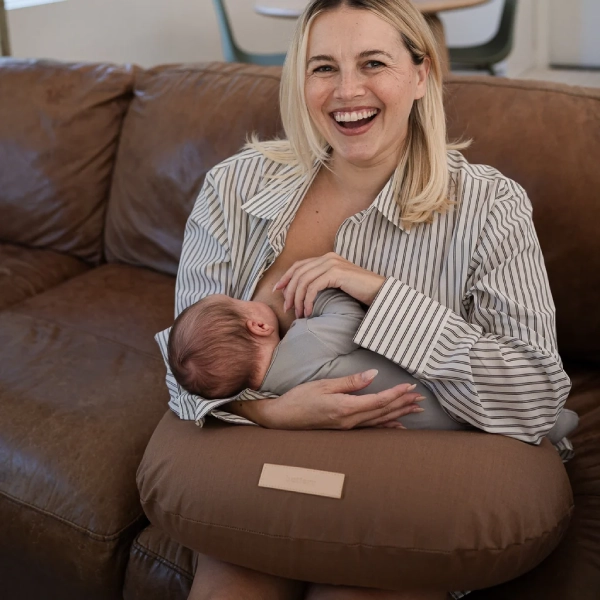
Five colours cost $116 and five cost $122.
Here is the thing we could not find an answer to.
Blush, Earth, Ginger, Magnolia, Natural and Wheat are $116. Birch, Chestnut, Fable, Mahogany and Sandstone are $122. That same $6 split runs straight through the pillow cover range as well, where $42 becomes $48 on exactly the same set of shades.
On the pillow that is a 5.2% premium. On a cover it is 14.3%, because the same six dollars sits on a much smaller base.
There may well be a good reason, such as a different dye process or a more expensive fabric for the darker shades. The pages we read do not give one, so a shopper picking on looks has no way to know whether they are paying for something or simply for a colour.
Why You Should Buy One Spare Cover, Not Three
The spare cover question | Figure |
|---|---|
One spare cover | $42 to $48 |
Two spare covers | $84 to $96 |
Two covers against a whole new pillow | Up to 78.7% |
What that means | Three covers cost more than a pillow |
Practical answer | Buy one spare, not three |
Two spare covers cost up to 78.7% of a whole new pillow.
This is the arithmetic that should shape your order.
A spare pillow cover is $42 to $48, which works out at 36.2% to 39.3% of the pillow it goes on, so buying two spares means spending up to $96, which is 78.7% of what an entire second pillow would have cost you.
Buy three and you have spent more than a whole new pillow on fabric alone. One spare is sensible so you can wash one while using the other. Beyond that the maths stops working, and a second complete pillow for a different room starts to make more sense.
What Is Actually Inside It
What is inside it | As published |
|---|---|
Fill | Natural latex from the rubber tree |
Process | Sap moulded, steam baked, dried |
What it replaces | Petroleum based polyurethane foam |
Cover fabric | Described as organic |
Exact fibre composition | Not stated on the pages we read |
Natural latex rather than polyurethane foam.
This is where the price starts to justify itself, and it is a real point of difference rather than marketing.
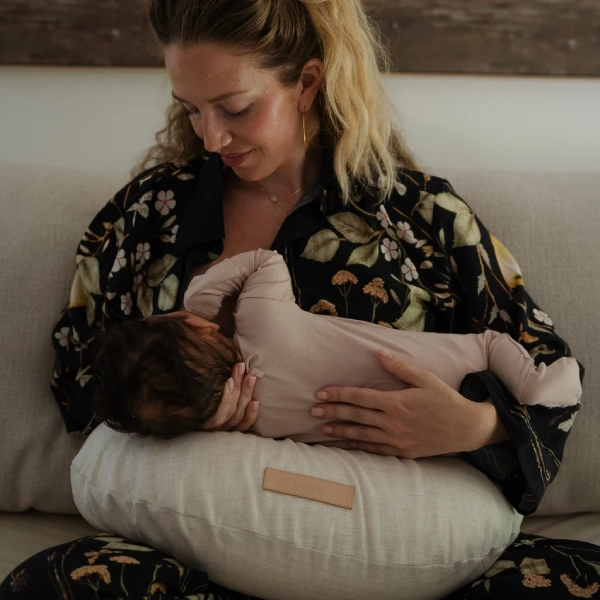
The fill is natural latex, tapped from the rubber tree, moulded, steam baked and dried. The brand positions this directly against the petroleum based polyurethane foam used in most nursing pillows, and says the latex contains no synthetic chemicals, pesticides or herbicides.
Latex foam also holds its shape longer than cheap polyurethane, which sags into a dip over months of daily use. On a product you lean on several times a day for a year, that is a reasonable thing to pay for.
The gap is the pillow cover fabric. It is described as organic and moisture resistant, but we could not find an exact fibre composition anywhere on the pages we read, which is odd given how specific the brand is prepared to be about the fill.
One Thing to Check Before You Order
The latex question | Detail |
|---|---|
Fill material | Natural latex |
Why the brand uses it | Avoids petroleum foam |
What it also is | A known allergen for some people |
Who should check first | Anyone with a latex allergy |
Where to ask | Your doctor, not a product page |
Natural latex is an allergen for some people.
We want to raise this plainly and without alarm, because it follows directly from the material choice.
Natural latex is a known allergen. Most people have no issue with it at all, and a latex core inside a covered pillow is a very different exposure from a latex glove against skin. But if anyone in your household has a diagnosed latex allergy, this is the product detail that matters most and it is worth raising with your doctor rather than deciding from a website.
We are not suggesting the product is unsafe and we have no basis to. We are saying the fill material is the brand's main selling point, and for a small number of families it is also the reason to choose something else.
The Certifications, Which Are Real
The certifications claimed | What each one is |
|---|---|
OEKO-TEX Standard 100 | Tested for harmful substances |
GOTS | Organic fibre and supply chain |
SGS | A testing and certification company |
Which products GOTS covers | The cover, per the brand |
Which products SGS covers | Not specified |
Our view | Two of these are real and specific |
OEKO-TEX Standard 100 and GOTS on the cover.
Credit where it is due, because this is better than most of the category.
The brand cites OEKO-TEX Standard 100, under which the cover was tested for over a thousand substances harmful to human health, and GOTS certification covering organic fibres and the supply chain. Both are genuine third party standards with published criteria rather than self declared badges.
SGS is also named. SGS is a real testing and certification company, but the pages we read do not say which products or which tests that covers, so it carries less weight than the other two until you know what was tested.
Budget for the pillow plus one spare cover, not the pillow alone
Check whether your colour is in the $116 or $122 group
Raise the latex fill with your doctor if allergy is a concern
Ask which products the SGS certification actually covers
The Rest of the Range
Product | Price | Note |
|---|---|---|
Hooded towel, single | $28 | Bamboo, per the URL naming |
Hooded towel bundle | $79 | From $84, a 6.0% saving |
Pillow cover | $42 to $48 | Sold separately |
Nursing pillow | $116 to $122 | The core product |
Mom's Box | $235 | Gift set |
From $28 towels to a $235 gift box.
Beyond the pillow and the pillow cover range, the brand sells bamboo hooded towels at $28 each, a towel bundle at $79, a Nest and Rest bundle at $100 and a Mom's Box gift set at $235.
One note on that towel bundle. It is listed at $79 from $84, which is a saving of 6.0%, and three single towels would also come to $84. So the bundle saves five dollars rather than offering a meaningful bulk discount, and it is worth checking what is actually in it before assuming otherwise.
Three of the twenty nine listings we saw were sold out, which is 10.3% of the range, so colour availability is worth confirming before you settle on a shade.
The Safety Point That Applies to Every Brand
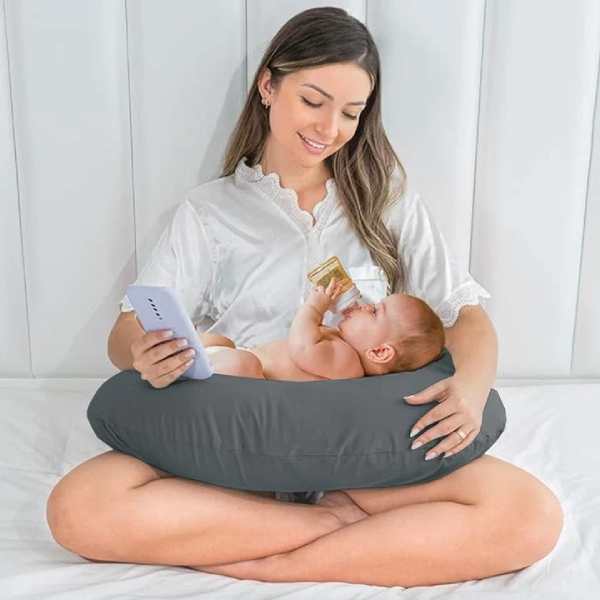
Before using any nursing pillow | Why |
|---|---|
It is for feeding, not sleeping | Never leave a baby asleep on one |
Stay with the baby throughout | Supervision is the point |
Move the baby when feeding ends | To a flat, firm, empty sleep surface |
Check current recalls | Nursing pillows are regulated |
Ask your pediatrician | Safe sleep guidance is theirs |
A nursing pillow is a feeding product, not a sleep product.
This is not specific to this brand and we would write it in any review of any nursing pillow.
Nursing pillows are designed to support a baby during feeding, with an adult awake and present. They are not sleep surfaces, and a baby should be moved to a flat, firm, empty sleep space when the feed ends. These products are federally regulated in the US, and recall listings are worth checking for any brand before you buy.
We are not qualified to give safe sleep guidance and this article does not attempt to. Your pediatrician is, and that is the conversation to have.
Final Verdict
Category | Score |
|---|---|
Material Transparency | 8 / 10 |
Third Party Certification | 8.5 / 10 |
Price Against The Category | 4.5 / 10 |
Clarity Of Colour Pricing | 4 / 10 |
Range And Choice | 7.5 / 10 |
Overall Score | 6.5 / 10 |
Six and a half out of ten. The material story is the strongest part of this Butterr review, with a natural latex fill instead of petroleum foam, OEKO-TEX Standard 100 and GOTS certification on the cover, and a shape that should hold up better than cheap polyurethane over a year of daily use. Against that, $116 to $122 is a lot for a nursing pillow, spare covers at $42 to $48 are 36% to 39% of the pillow itself, and nothing on the site explains why five colours cost $6 more than the other five. Buy it if certified materials are the reason you are shopping, budget for one spare cover rather than three, and check the latex fill against any allergy in the house.
FAQs
How much is a Butterr nursing pillow?
$116 or $122 depending on the colour you choose, with spare covers at $42 or $48 on the same split.
Why do some colours cost more?
The pages we read do not say. Five colours are $116 and five are $122, a difference of $6 or 5.2%, with the same $6 gap on covers where it works out at 14.3%.
What is the Butterr pillow filled with?
Natural latex from the rubber tree, moulded and steam baked, which the brand positions against the petroleum based polyurethane foam used in most nursing pillows.
Is it certified?
The brand cites OEKO-TEX Standard 100 and GOTS on the cover, both genuine third party standards, and names SGS without specifying which products or tests it covers.
Do I need a spare cover?
Most people end up wanting one so they can wash one while using the other. Two spares cost up to 78.7% of a whole new pillow, so one is the sensible number.
Can a baby sleep on a nursing pillow?
No. Nursing pillows are feeding products used with an adult awake and present, not sleep surfaces. Take safe sleep guidance from your pediatrician.