Little Spoon Review: The Only Baby Food Brand Publishing Its Own Test Results
Start with the thing that actually separates Little Spoon from every other baby food company in America, because it is not the taste and it is not the price.
In September 2024 Little Spoon launched an initiative it calls Little Spoon, Big Change, committing to test every batch against limits for more than 500 chemical contaminants and publish the results on a public dashboard. For heavy metals, those limits are aligned with what the European Union mandates rather than what the United States does, which matters because the US has no binding federal limits for most contaminants in baby food. The FDA figures that exist are action levels, and action levels are guidance.
No other US baby food brand has made that commitment publicly. If you have been following the heavy metals story in baby food since the 2021 congressional report, that single fact is probably why you are reading this page.
Verdict in one minute
The safety transparency is real and genuinely unmatched in the category. It is the strongest reason to choose Little Spoon.
Babyblends are good value at $2.96 to $4.04 per blend. Plates at $5.83 to $7.50 per meal are expensive for food a toddler may refuse.
Subscription only, no trial, and the first order cannot be cancelled. You are committing to at least one full delivery before you know whether your child will eat any of it.
Shipping is not included in the per meal price, and delivery is contiguous US only.
Independent testing has found cold chain problems. A box arriving barely cold is a real risk with fresh, never frozen food.
Where the transparency claim holds up, and where it does not
Being fair about this matters, because it is the brand's main argument for its price.
What holds up: the EU alignment on heavy metals is a meaningful, checkable standard, and publishing per contaminant test limits alongside ingredient sourcing is more than any competitor offers. The dashboard exists.
What to keep in perspective: at launch the dashboard covered the Babyblends line only, with wider coverage described as coming in the following months, so check which products are actually represented before you assume your purchase is covered. The company sets and verifies its own standards, and the announcement did not explain whether any independent third party audits compliance. The consumer survey used to launch the initiative was commissioned by Little Spoon rather than independent.
None of that makes the programme hollow. It makes it a self administered programme that is still better than no programme, which is what everyone else in the aisle offers. Judge it as a serious step rather than as an audited guarantee.
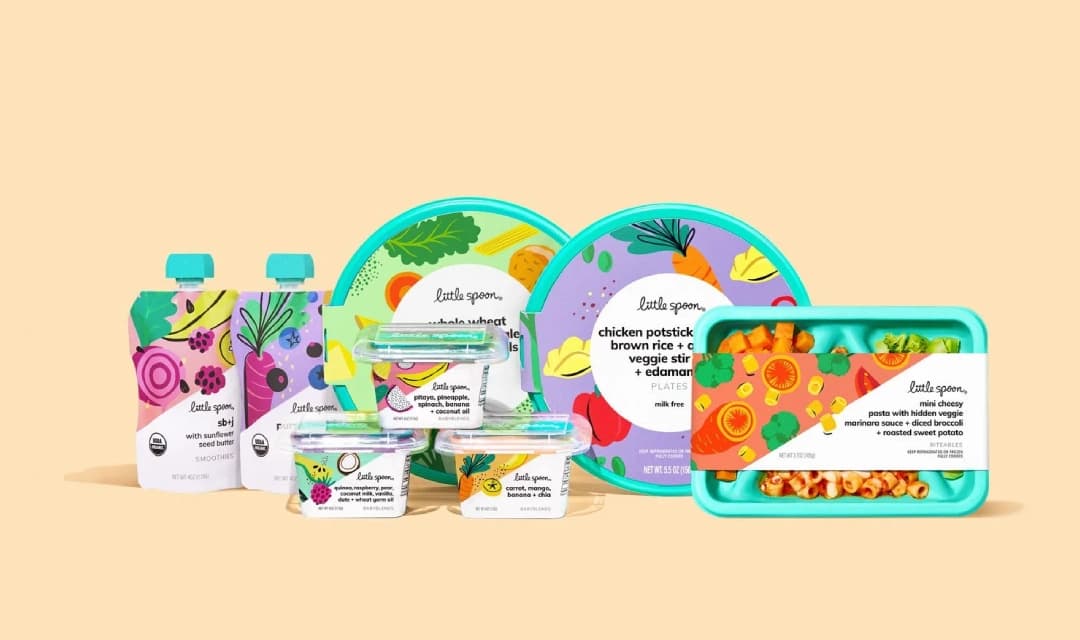
Babyblends
$2.96 to $4.04 per blend, ordered in quantities of 14, 28 or 42.
Fresh, cold pressure treated purees in single serve cups, sold by developmental stage. This is the line Little Spoon was built on, the line the testing dashboard launched with, and the best value in the catalogue.
The comparison people usually make is against a $1.50 pouch at the supermarket, which Little Spoon loses on price every time. The more useful comparison is against making it yourself. If you are steaming and blending from scratch, Little Spoon is competing with your Sunday afternoon rather than with Gerber, and roughly $3 a serving to get that afternoon back is a reasonable trade for a lot of households.
Buy the larger quantity if you commit. The difference between the 14 count and 42 count works out to over a dollar a blend, which is a third of the price.
Plates
$5.83 to $7.50 per meal, minimum 8 per delivery.
Finished toddler and big kid meals. This is where the value argument gets harder, and where the honest answer depends entirely on your child.
Independent testing found the hit rate sobering. One reviewer's children genuinely ate four out of twelve meals. At $7.08 each, that is a lot of money for food scraped into the bin, and nothing about the brand's quality causes it. Toddlers reject food. That is the job description.
The menu is also limited, with roughly 28 toddler and kids meals in rotation, so an order of 12 will contain repeats. For a child in a narrow eating phase that repetition is fine or even helpful. For a child who tires of a meal after one exposure, it is a problem.
The practical advice is to order the minimum eight on your first delivery, find out which two or three your child will actually eat, and then build repeat orders around those rather than taking the full assortment.
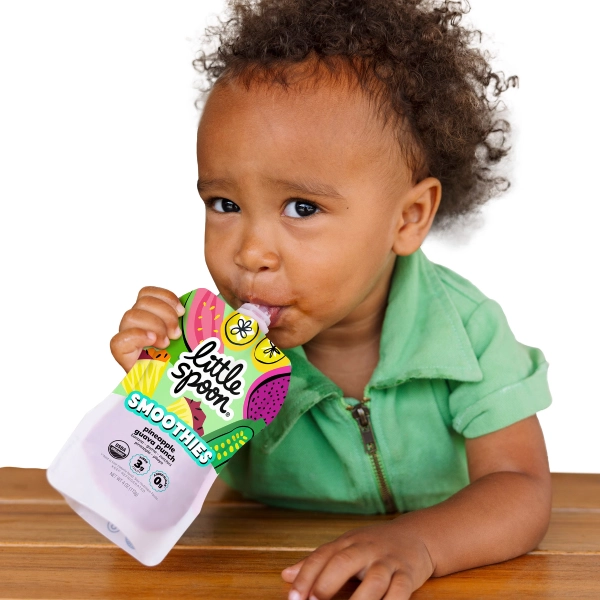
Smoothies
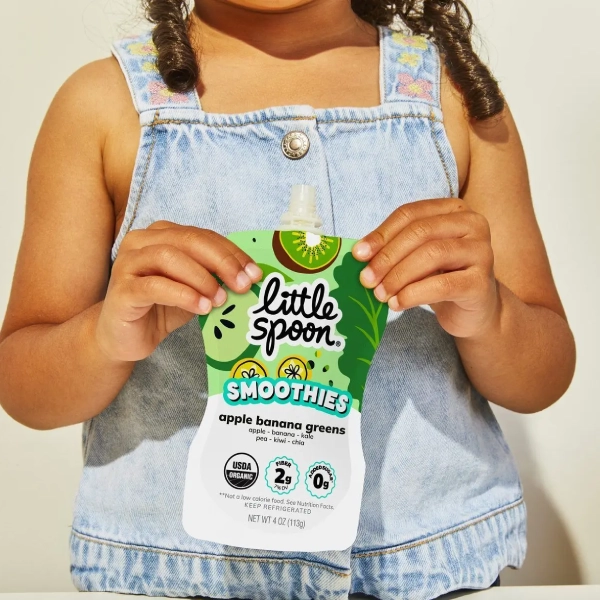
$2.82 to $4.07 each, ordered in quantities of 12 to 36.
The weakest line by independent assessment. One tester described them as mostly a miss apart from strawberry banana, which is the flavour any child was always going to accept.
Smoothies are also the easiest thing in this catalogue to replicate at home for under a dollar with frozen fruit and a blender. Unless you specifically need shelf stable single serve portions for daycare, this is the line to skip and the money is better spent on Babyblends.
Biteables and the wider range
Little Spoon has extended into finger foods and snacks, and in recent years into infant formula, moving it from a puree company toward a full feeding brand.
Treat the newer lines with more caution than the core products, for one specific reason: the transparency dashboard started with Babyblends. A brand that expands faster than its own testing programme can follow is not doing anything wrong, but the safety story that justifies the price does not automatically travel to every new SKU. Ask which products the published testing covers before you assume.
The small print that costs people money
1. The first order cannot be cancelled. Skipping, pausing and cancelling all apply to future deliveries. Once you place the first one you are paying for it, whether or not your child eats a single spoonful. Order the minimum quantity first.
2. There is no trial. Every competitor comparison you read that mentions a trial is talking about someone else.
3. Shipping is not in the per meal price. Work out the real cost by dividing your total order value, including delivery, by the number of meals, not by quoting the headline figure.
4. Deliveries are biweekly by default, so the amount leaving your account is roughly double what the per meal price suggests you are spending.
5. Contiguous US only. No Alaska, Hawaii or international delivery.
The cold chain problem
This deserves its own section because it is the one failure that undermines everything else. Little Spoon sells fresh, cold pressure treated food that is not frozen, which means the delivery temperature is not a convenience issue, it is a safety issue.
Independent testing has recorded a box arriving a day late and barely cold, with a ruptured gel ice pack inside. Packaging and shipping scored 2.5 out of 5 in that assessment.
What to do about it: be home on delivery day or have the box brought inside promptly, check the temperature of the contents rather than the outside of the box, and photograph anything that arrives warm before you throw it out. Contact support the same day. A brand charging a premium for freshness should be replacing a box that arrives warm, and you need the photograph to make that straightforward.
Worth buying if
Contaminant testing is your main concern and you want the only brand publishing its results.
You would otherwise be cooking and pureeing from scratch, and your time has a real value.
You are buying Babyblends rather than Plates, where the per serving economics work much better.
You can take delivery promptly on a weekday.
Skip it if
You want to test a few meals before committing. The structure does not allow it.
Your child is a reliable rejecter of new food, in which case $7 a plate becomes $20 a plate in practice.
You are comparing against supermarket pouches on price alone. Little Spoon loses that comparison and is not really trying to win it.
You are outside the contiguous US.
Final word
Little Spoon is the rare subscription where the premium buys something you can actually verify rather than a story about farm partners. The EU aligned testing and the public dashboard are a genuine first in American baby food, and the company deserves credit for doing it when no regulation required it.
The business model around that product is less generous. A subscription with no trial and an uncancellable first order is designed to make leaving slightly harder than joining. Start with eight Plates or fourteen Babyblends, learn what your child will eat, and scale from there. Do not start with a 42 count on faith.