Each and Every Deodorant Review: Going Through All Six Ingredients

On This Page
- The Whole Formula
- One: The Base
- Two and Three: The Dry Bit
- Four and Five: Where the Work Happens
- Six: The One We Would Relabel
- What Is Not In It
- What It Costs
- The Premium, Measured
- Who It Is For
- Final Verdict
- FAQs
- How much is Each and Every deodorant?
- Is it baking soda free?
- What is actually in it?
- Does it stop sweating?
- Is it certified?
- Is it worth the price?
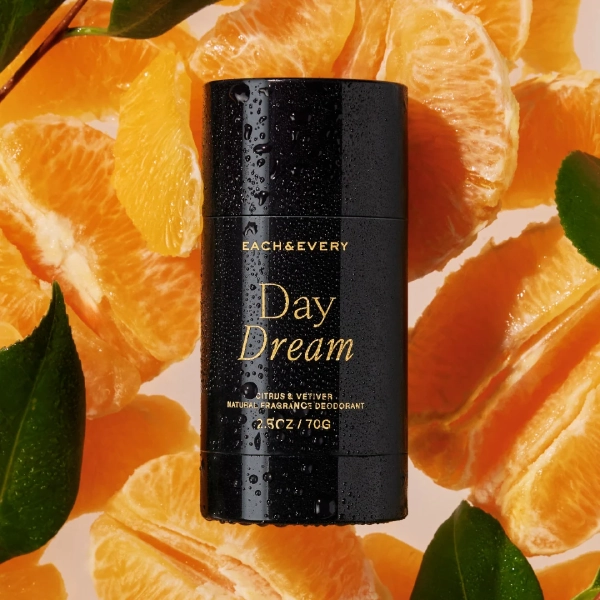
Most natural deodorant has a long ingredient list and a short explanation. This one has the opposite, which makes this Each and Every deodorant review unusually easy to write.
There are six ingredients. We are going to go through all of them.
The Whole Formula
Ingredient | Brand calls it | What it is doing |
|---|---|---|
Caprylic/Capric Triglyceride | Coconut oil | The base |
Tapioca Starch | Tapioca Starch | Absorbs moisture |
Ozokerite | Earth wax | Holds the stick solid |
Magnesium Hydroxide | Dead Sea salt | Odour control |
Magnesium Carbonate | Dead Sea salt | Odour control |
Piroctone Olamine | Antioxidant salt | Antimicrobial |
Six ingredients, and the last one is the interesting one.
That is the complete list for the unscented version, and we mean complete: not a list of active ingredients, not a list of highlights the marketing team picked, but every single thing in the stick.
Transparency like that is rare and genuinely worth something, because a six item list is a list you can actually check against whatever your skin has reacted to before.
One: The Base
Caprylic/capric triglyceride, which the brand describes as oil made from coconuts, is the carrier that everything else sits in, and it is a common, well understood cosmetic base that appears in a great many products you already own. Nothing unusual here.
Two and Three: The Dry Bit
Tapioca starch absorbs moisture and ozokerite, described as earth wax, is what keeps a stick solid rather than oily.
Together those two are the texture of the product. They are not doing anything about odour, and no deodorant stick works without something playing these roles.
Four and Five: Where the Work Happens
Baking soda free, and why | Detail |
|---|---|
What usually does the work | Sodium bicarbonate |
Why brands use it | It neutralises odour cheaply |
Why some people avoid it | It is alkaline |
What this uses instead | Magnesium hydroxide |
Also present | Magnesium carbonate |
Magnesium hydroxide instead of sodium bicarbonate.
This is the decision that defines the product, and it is the reason to consider it over cheaper options.
Most natural deodorant leans on baking soda, sodium bicarbonate, because it neutralises odour effectively and costs very little. It is also alkaline, and a well known share of people find it irritating under the arm.
This formula uses magnesium hydroxide and magnesium carbonate instead, which the brand labels as Dead Sea salts. That is what makes it baking soda free, and if baking soda is the reason previous natural deodorants did not work out for you, this is the specific thing you are buying.
We are not going to tell you how your skin will respond, because we cannot know that and it is a question for a doctor or pharmacist rather than a review.
Six: The One We Would Relabel
One description we would correct | Detail |
|---|---|
Brand calls piroctone olamine | An antioxidant salt |
It is normally classed as | Antifungal and antimicrobial |
Commonly found in | Anti dandruff shampoos |
Does that make it bad? | No, it is doing useful work |
Our point | The plain language label is wrong |
The brand calls it an antioxidant salt. It is an antimicrobial.
Piroctone olamine is the last ingredient and the brand's plain language description of it is not accurate.
The product page calls it an antioxidant salt. An independent reference classes piroctone olamine as an antifungal and antimicrobial agent, most commonly encountered in anti dandruff shampoos, where it works by disrupting fungal cell metabolism.
We want to be clear that this is a labelling criticism and not a safety one. The ingredient is almost certainly there to control the microbes that cause underarm odour in the first place, which is exactly what a deodorant should do, and it is a sensible inclusion.
The point is narrower. A brand built on telling you what every ingredient is should describe the one doing the most interesting work correctly, and antioxidant is the wrong word for it.
What Is Not In It
Free from | Stated |
|---|---|
Aluminium active | Yes |
Baking soda | Yes |
Artificial fragrance | Yes |
Parabens | Yes |
Gluten | Yes |
Certification | EWG Verified |
No aluminium active, no baking soda, no fragrance, and EWG Verified.
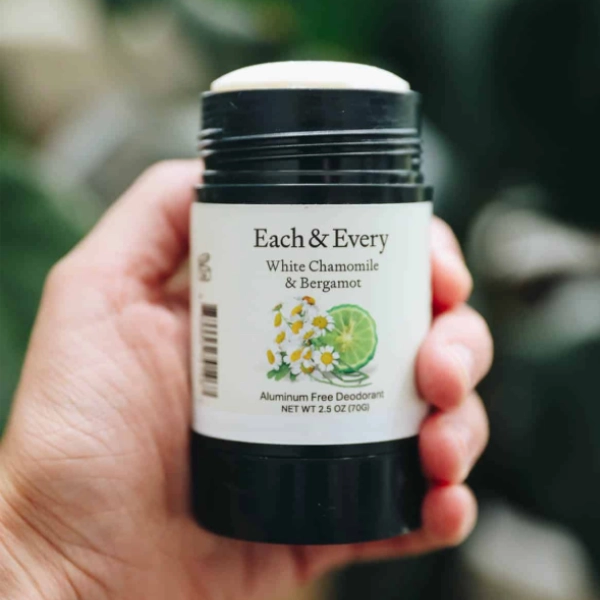
The stated exclusions are aluminium active, baking soda, artificial fragrance, parabens and gluten, and the unscented version contains no fragrance or scent maskers at all.
It is EWG Verified, cruelty free and vegan, with packaging made from recycled materials. EWG Verified is a third party mark with published criteria rather than a self declared badge, which puts it ahead of brands that simply write clean on the label.
One honest note on aluminium free. That makes this a deodorant rather than an antiperspirant, so it is formulated to address odour, not wetness. If you are looking to reduce sweating, this category is not what does that.
What It Costs
How you buy it | Price | Per ounce |
|---|---|---|
One time, 2.5oz | $22.00 | $8.80 |
Subscribe and save | $18.70 | $7.48 |
That discount is | 15% | - |
Three pack | $50 to $60 | $6.67 to $8.00 |
Against three singles at $66 | Saves 9.1% to 24.2% | - |
$22 a stick, or $8.80 an ounce.
A 2.5oz stick is $22.00 one time, which is $8.80 an ounce. Subscribing takes it to $18.70, a 15% discount, or $7.48 an ounce.
A three pack is listed at $50 to $60 against $66 for three singles, which saves between 9.1% and 24.2% depending where in that range your selection lands. Free shipping starts at $50, so the three pack clears it and a single stick does not.
The Premium, Measured
Against a supermarket stick | Figure |
|---|---|
This, per ounce | $8.80 |
A $5 stick at 2.6oz | $1.92 |
Difference | About 358% more |
At one stick every two months | About $132 a year |
What you are paying for | Short list and certification |
About 358% more per ounce than a supermarket stick.
Any Each and Every deodorant review that skips this comparison is doing you a disservice, so put it against the thing most people are switching from. A typical supermarket stick at around $5 for 2.6oz works out at about $1.92 an ounce.
At $8.80 an ounce this is roughly 358% more by our arithmetic. If a stick lasts you two months, you are looking at about $132 a year against roughly $29 for the supermarket option.
That is the honest size of the decision. You are paying a large multiple for a six ingredient formula, no baking soda and a third party certification, and whether that trade is worth it depends entirely on whether the cheap option was actually causing you a problem.
Patch test before committing to a three pack
Buy the single first, not the bundle
Remember this is deodorant, not antiperspirant
Check the scented versions have a longer list
Who It Is For
Worth trying if | Skip it if |
|---|---|
Baking soda has irritated you | Baking soda is fine for you |
You want a very short list | Ingredient count is not your issue |
You want no fragrance at all | You want a strong scent |
You value third party marks | You buy on price |
$22 a stick is acceptable | You want supermarket pricing |
Baking soda reactors and short ingredient lists.
The clearest case for this natural deodorant is somebody who tried the category before, got irritated, and worked out that baking soda was the likely culprit. For that person the formula is aimed precisely at the problem.
The clearest case against it is someone whose current deodorant works fine. At 358% more per ounce there is no performance claim here that justifies switching for its own sake, and we would rather say that than pretend otherwise.
Final Verdict
Category | Score |
|---|---|
Ingredient Transparency | 9.5 / 10 |
Formula Simplicity | 9.5 / 10 |
Third Party Certification | 8.5 / 10 |
Accuracy Of Plain Language Labelling | 5 / 10 |
Value For Money | 4.5 / 10 |
Overall Score | 7 / 10 |
Seven out of ten. The six ingredient formula is the shortest we have seen in this category and the full list is published plainly, it is baking soda free using magnesium hydroxide instead, and EWG Verified is a real third party mark rather than a self declared one. Two things pull the score down. At $22 for 2.5oz, or $8.80 an ounce, it is about 358% more than a supermarket stick, and a brand whose entire pitch is explaining its ingredients describes piroctone olamine as an antioxidant salt when it is an antimicrobial. Worth it if baking soda has been your problem. Hard to justify if it has not.
FAQs
How much is Each and Every deodorant?
$22.00 for a 2.5oz stick, or $18.70 on subscription, which is 15% off. That is $8.80 and $7.48 an ounce respectively.
Is it baking soda free?
Yes. It uses magnesium hydroxide and magnesium carbonate for odour control instead of sodium bicarbonate.
What is actually in it?
Six ingredients: caprylic/capric triglyceride, tapioca starch, ozokerite, magnesium hydroxide, magnesium carbonate and piroctone olamine.
Does it stop sweating?
No. It is aluminium free, which makes it a deodorant rather than an antiperspirant, so it targets odour rather than wetness.
Is it certified?
It is stated as EWG Verified, cruelty free and vegan, with recycled packaging. EWG Verified is a third party mark with published criteria.
Is it worth the price?
At about 358% more per ounce than a supermarket stick, it is worth it mainly if baking soda or fragrance has caused you problems before.