
The Farmer’s Dog Review 2026: Is Freshly Made Dog Food Worth the Switch?
On This Page
- About The Farmer’s Dog
- Highlights
- Review of The Farmer’s Dog
- Unique Features
- What the evidence says about the benefits of fresh food
- Digestibility
- Moisture
- Portion Control and Weight
- Coat, immune system support, puppies, and senior dogs
- Where disagreements over the evidence arise
- How much does The Farmer’s Dog cost?
- The Farmer’s Dog Review: What Do Customers Think?
- The Farmer’s Dog FAQs
About The Farmer’s Dog
The bag sitting on the pet food aisle shows a slice of steak next to some fresh carrots. The front of the bag doesn’t say how much meat it contains or what process it went through to become dry, brown kibble. Pet food packaging can say a lot, but it reveals very little, so such an important decision for people is made based solely on a photograph.
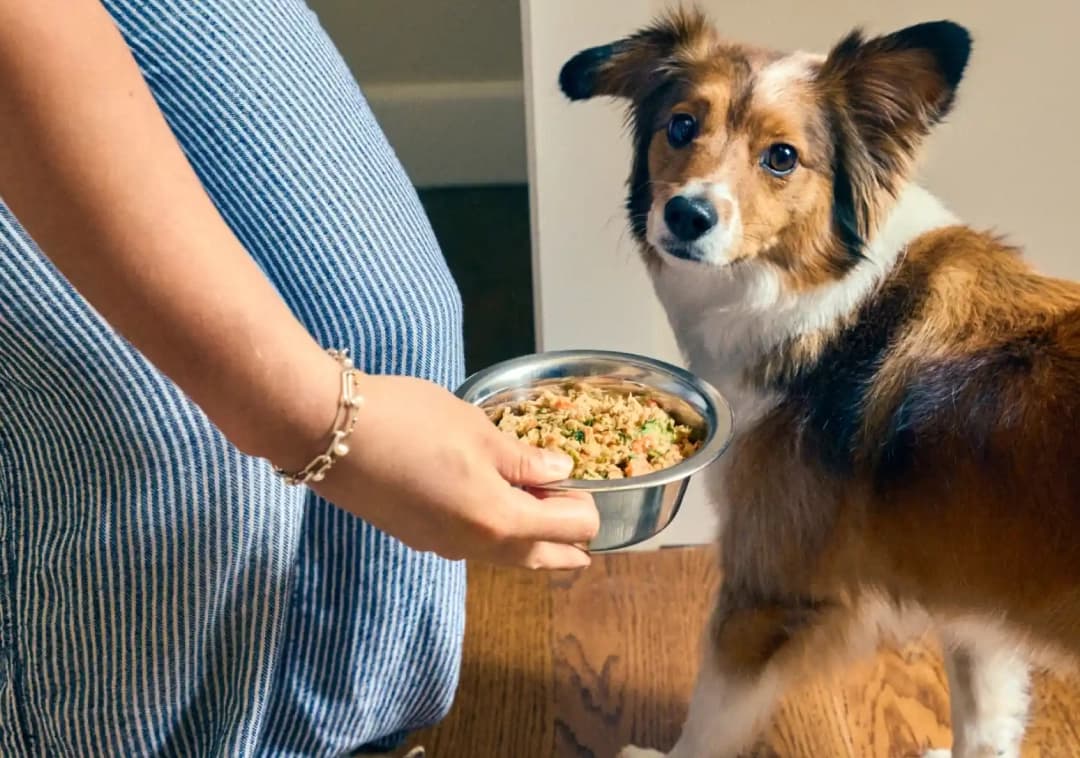
The Farmer’s Dog has built its business by eliminating that ambiguity. The company delivers freshly prepared, human-grade food directly to your door in individual portions tailored to each specific dog, in packaging that is stored in the freezer and thawed as needed. It has been in business for about a decade, has delivered more than one billion meals, and has become the brand most people picture when they hear the words “fresh dog food.”
Its selling point is based on three key aspects. The recipes are formulated by the company’s own Board Certified Veterinary Nutritionists®, and production takes place in facilities registered for both human and animal food, which operate in accordance with human food safety standards. The fresh meal plans consist of portions calculated based on your dog’s individual needs, rather than being measured according to a weight range printed on a bag.
Whether this combination justifies the cost and for which households it’s truly suitable deserves a more detailed analysis than what the marketing materials provide. The research, the pros and cons, and the aspects the brand addresses less are what we’ll examine below.
Highlights
The Farmer’s Dog offers freshly prepared, human-grade food, portioned into daily servings for each individual dog.
The recipes are developed by the company’s own Board Certified Veterinary Nutritionists® to meet or exceed AAFCO requirements and WSAVA guidelines.
The food is cooked at a low temperature and then flash-frozen, rather than extruded at high temperatures.
Production takes place in facilities that process food for human consumption, under the same safety and handling standards that apply to human food.
Over one billion meals have been delivered over the course of approximately a decade of operation.
The freshly prepared food has a moisture content of about 71%, compared to approximately 6% for dry food.
A 2024 study conducted by the University of Illinois revealed that extruded foods ranked last in all four digestibility parameters evaluated, compared to other formats.
Instant Fresh is a long-shelf-life line produced through low-temperature drying, aimed at households with limited freezer space.
Since April 2026, personalized meal plans have been available through retail stores.
Snap Sticks training treats hit stores on August 1, 2026, as a one-time purchase.
The launch discount is 50% off the first box, with free shipping on all orders.
Review of The Farmer’s Dog
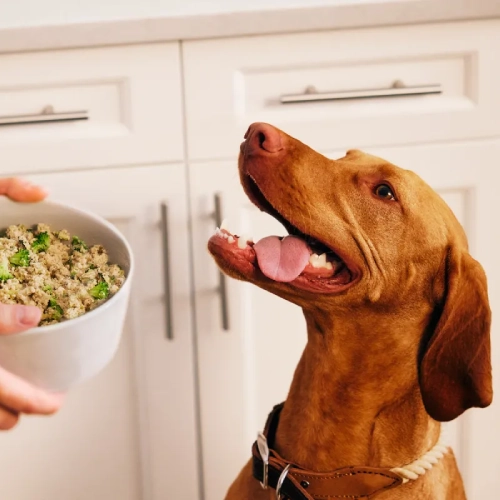
The term “fresh” is used quite broadly in this category, so it’s best to be specific about what you’re buying. The Farmer’s Dog prepares its food using whole cuts of meat and vegetables, slow-cooked at relatively low temperatures to eliminate pathogens while maximizing nutritional value and moisture; the food is then flash-frozen for delivery.
“Frozen Fresh” is the brand’s original line of slow-cooked food, delivered in daily packages with pre-portioned meals. The Farmer’s Dog also offers treats, providing another option for dog owners who want to incorporate the brand into their pet’s daily routine. Meals and treats from the “Frozen Fresh” line are currently available through Amazon.
Below, we explain how the food is made and planned, what published studies do and don’t show, how much it costs, what customers think, and which households the brand targets.
Unique Features
There are six aspects that set this service apart from any bag of dog food you might find on store shelves. Some have to do with the food itself, and others with the system that determines how much your dog receives.
1. Freshly prepared foods, suitable for human consumption
Whole meats and vegetables are used; gentle cooking at low temperatures helps preserve nutrients, and rapid freezing preserves the final product without removing moisture or adding preservatives. What the brand emphasizes most is not just freshness itself. There are many products that call themselves “fresh” even though they are manufactured according to animal feed standards. Their foods are produced in facilities that comply with food safety and food handling standards for human consumption, and the company states that it inspects every batch before shipment.
2. Recipes developed by Board-Certified® Veterinary Nutritionists who are part of our team
Board-Certified® Veterinary Nutritionists are a small professional group, and most pet food brands outsource this work or seek advice on a formula just once and then move on to something else. The Farmer’s Dog keeps them on staff, and the recipes are formulated to meet or exceed AAFCO requirements and WSAVA guidelines. The company also states that several recipes are AAFCO-certified through feeding trials, which is the stricter of the two paths to earning the “complete and balanced” designation.
3. Daily packs with ready-to-serve portions
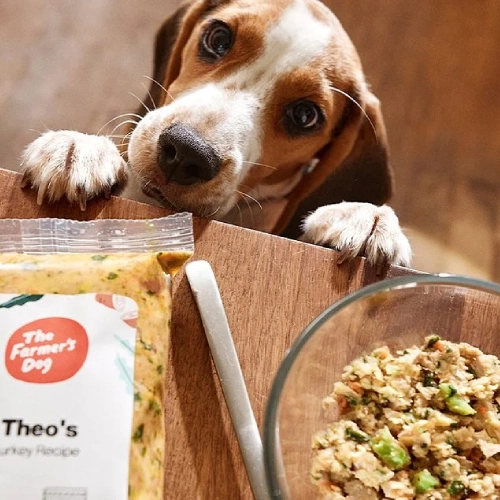
The food arrives frozen in packs labeled with your dog's name; each one contains the exact portion calculated for them. There is no need to use scoops or interpret weight ranges—simply thaw the next pack when the time comes, as the portion size is clearly indicated on the packaging.
4. A plan tailored to your dog
You answer questions about your dog's age, breed, weight, body condition, activity level, and whether they are spayed or neutered, and you receive a plan with portion sizes calculated based on that information. The brand makes an important distinction here—and it is a valid point—that while the plan is personalized, the recipes themselves are not. You get a complete and balanced recipe served in portions adjusted to your dog's calculated needs, rather than a custom-made formula created by combining individual ingredients one by one.
5. Research and publications
Most pet food brands do not publish studies. The Farmer’s Dog has funded and disseminated research—including a year-long study on senior dogs conducted in collaboration with Cornell researchers and published in Metabolites in October 2025—and has also committed an additional $10 million to veterinary research as of March 2025. Approach this information with caution, for the reasons explained in the following section.
What the evidence says about the benefits of fresh food
This brings us to the informational section, where it is important to distinguish between what has been proven and what is merely inferred. Some of these claims have independent backing, while others are based on studies funded by the brand itself.
Digestibility
Fresh foods of human-grade quality are highly digestible; this means the dog can absorb a greater amount of the nutrients in its bowl rather than simply excreting them. The visible result is smaller, firmer stools, which is often the first change owners notice.
The evidence supporting this is quite robust. Compared to extruded diets, gently cooked fresh foods tend to yield better results regarding the digestibility of dry matter, protein, fat, and energy. Furthermore, dogs fed fresh food may produce less stool and require a smaller total amount of food to maintain their body condition.
However, there is an important caveat. These comparisons do not isolate the processing factor alone. Typically, the diets differ in both preparation and ingredients, making it difficult to determine exactly how much of the difference is attributable to processing. Additionally, some of this research has been funded by fresh food companies—a detail worth considering when interpreting the results.
Moisture
Dry food contains around 6% moisture, whereas freshly prepared food contains approximately 71%. A dog eating dry food must compensate for this difference by drinking water, and many do not do so adequately. A 2025 study published in Frontiers in Veterinary Science measured total daily water intake and revealed that dogs fed fresh food met 141% of their minimum water requirements, compared to 102% for those fed dry food.
Two points regarding this are worth noting. The study was fully funded by The Farmer’s Dog; two of the three authors worked for the company, and the third had ties to it in addition to holding a position at Cornell. Furthermore, another part of the same research found that dogs fed canned food consumed significantly more water than those fed fresh food, although both groups met their requirements. What truly matters here is the moisture content, not the freshness itself.
Portion Control and Weight
The most compelling argument is also the least flashy. Meal plans feature pre-calculated portions tailored to each dog's specific needs, making weight management easier than eyeballing the amount when scooping food directly from the bag.
The reason is that maintaining a healthy weight demonstrably contributes to longevity; in fact, dogs at a healthy weight can live up to 2.5 years longer. This figure comes from a large-scale 2019 study involving approximately 51,000 dogs across 12 breeds, and it is important to interpret it correctly, as it is often cited inaccurately. That 2.5-year figure represents the upper limit of a range observed in male Yorkshire Terriers, whereas the difference for male German Shepherds was a mere five months. The finding is real, but it relates to body condition rather than a specific food product.
Therefore, the connection is as follows: pre-portioned meals make it easier to keep a dog at a healthy weight, and a healthy weight is linked to greater longevity. In other words, it is not the food itself that works the miracle.
Coat, immune system support, puppies, and senior dogs
Gentle cooking preserves essential nutrients that help maintain immune system function. Fresh food promotes healthy skin and a shiny coat. It is ideal for puppies—who can start eating it after weaning—with plans that easily adjust as their needs change. For senior dogs, its moisture content and easy digestibility are perfectly suited to their mouths and bodies.
Where disagreements over the evidence arise

The study on senior sled dogs, published in the journal Metabolites in October 2025, revealed favorable metabolic markers just one month after the dietary switch. In December 2025, a pet food industry consultancy published a detailed methodological critique; it argued that the study’s results were skewed by confounding factors—given that the diets differed in both composition and processing—and questioned some of the nutrient calculations. The Farmer’s Dog responded by noting that the study’s limitations had been openly acknowledged and that the critique came from a firm serving conventional pet food manufacturers.
Commercial interests on both sides come into play here. An objective interpretation indicates that research into fresh food is in its early stages, is evolving, and has not yet reached definitive conclusions; therefore, any article claiming otherwise is driven by commercial motives.
How much does The Farmer’s Dog cost?
The price is calculated per dog, per day, after completing a questionnaire regarding age, breed, weight, body condition, and activity level. A small dog eats less, so the food costs less; a large dog eats more, and the food costs more. Any single figure published as the price will be incorrect for most readers' dogs; that is why independent sites publishing price charts often disagree, sometimes showing differences of up to double the amount for the same weight range.
For this reason, we completed the questionnaire ourselves to see how the cost is calculated, and we discovered that the calculation structure itself is the most useful part.
The daily rate is determined after the questionnaire, based on your dog's calculated caloric needs. From there, you choose a feeding level. The full-meal option involves feeding the dog exclusively fresh food. The mixed plan combines this food with the dog's usual diet; in the quote we received, this option reduced the daily cost by approximately one-third.
The welcome discount is applied in two stages rather than just one; it is important to know this before planning your budget based on the offer.
The trial box includes a 50% discount. It contains fourteen days' worth of food, designed as a transition period that mixes the fresh food with the dog's current diet before switching to full meals.
The regular price applies starting with the next box. Therefore, the figure you should keep in mind for future costs is the one shown at checkout, not the discounted trial rate.
Shipping is free on all orders with no minimum purchase amount, and billing occurs per shipment rather than monthly.
Fresh food costs more per calorie than dry food (kibble), and the price difference increases as the dog gets larger. For a large breed, the expense represents a significant portion of the family budget, not an insignificant amount.
A note on how the brand itself presents its offering: The Farmer’s Dog advertises plans starting at just two dollars a day, but that figure applies to a small dog. The rate charged after the first package arrives is higher and depends on your dog's size and needs.
The Farmer’s Dog Review: What Do Customers Think?
The brand’s review history presents two key aspects, and focusing on only one of them would provide a distorted picture.
The volume of reviews is enormous and overwhelmingly positive. The brand claims to have served over a billion meals and to be recommended by thousands of veterinarians; furthermore, recurring themes in positive reviews remain consistent. Users note that their dogs show much more interest in the food and comment that cleanup is easier. A significant number of customers specifically praise the customer service. One Trustpilot user wrote that it is "the most human and attentive company I have ever dealt with"—an unusual comment for a food company.
The testimonials the company publishes on its own website revolve around these same two themes; although they are curated by the company itself rather than being independent, they are worth reading. Pre-calculated individual portions are frequently mentioned. One customer cited on the site notes that the daily portion format means "not having to measure or prepare anything: you simply take it out of the fridge and serve it." The other recurring theme is acceptance by dogs with picky palates. Another customer recounts how, for years, she had to stay with her dog during mealtime to get her to eat, noting that "now, Winnie eagerly awaits her meals." Both aspects align with independent reviews, serving as a useful benchmark when evaluating the brand-selected testimonials.
The situation on independent platforms reveals nuances that go beyond the general enthusiasm. On Trustpilot, the brand holds a score of 3.9 out of 5 based on approximately 1,700 reviews; A good rating, though not spectacular. Recurring complaints center on delivery and packaging issues, dogs refusing the food, and the price. It is worth noting that the situation with the BBB (Better Business Bureau) has changed significantly, so older reviews may not accurately reflect the current experience.
In summary, reviews suggest that this is a company with many satisfied customers, although it is not without complaints.
The Farmer’s Dog FAQs
Is the food raw?
No. It is gently cooked at low temperatures to eliminate pathogens and then flash-frozen for shipping. It is not raw, freeze-dried, or canned wet food.
Is a subscription required?
Meal plans operate on a subscription basis, ensuring you receive the right portions as your dog’s needs change. You can modify, pause, or cancel the service at any time through their customer support team, which is available 24/7. "Snap Sticks" training treats are sold separately in the brand's Amazon store in 3-ounce and 8-ounce bags.
Is it a complete and balanced diet?
Yes. The recipes are developed by board-certified veterinary nutritionists (part of the in-house team) to meet or exceed AAFCO guidelines; additionally, the company states that several recipes are certified to have passed AAFCO feeding trials. These trials represent the most rigorous certification method, as they involve feeding the product to dogs under supervision rather than simply calculating nutrient content on paper.