Lasko Review: Picking the Right One for the Job You Actually Have
On This Page
- Match the Job to the Machine
- The Fans
- The Heaters
- The All Season Option, Tested
- The Claims, Checked
- The Stock Problem
- Check the Price, and the Website
- Final Verdict
- FAQs
- How much do Lasko fans and heaters cost?
- Which one should I buy for a bedroom?
- Do the heaters heat a whole house?
- Are the products made in the USA?
- Why is everything sold out?
- Is the hybrid fan and heater any good?
Nobody wants a fan. They want a specific room to stop being uncomfortable, and this brand sells about forty different answers to that.
So this Lasko review is organised by the job rather than by the model number.
Match the Job to the Machine
The job | What to buy | Price seen |
|---|---|---|
Move air round a room | Cyclone 20in air circulator | $49.99 |
Cool a big space fast | 20in high velocity floor fan | From $79.99 |
Quiet bedroom cooling | Pinnacle 40in DC tower fan | $119.99 |
Heat one room | Artisan 16in ceramic tower | $59.99 |
Do both, all year | DUO Comfort 38in fan and heater | $119.99 |
Five jobs, five products, $49.99 to $119.99.
Those five cover most of what people actually come to this brand for, and they span a 300% price range from the cheapest listed product to the dearest.
The thing to understand before choosing is that moving air and cooling air are different jobs, and none of these do the second one. A fan makes you feel cooler by moving air over your skin. It does not lower room temperature, and no product in this range is an air conditioner.
The Fans
An air circulator and a tower fan solve different problems. The names do not make that obvious.
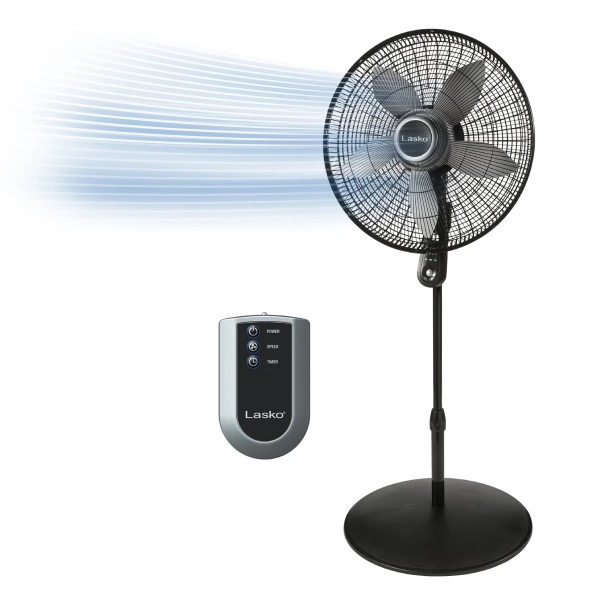
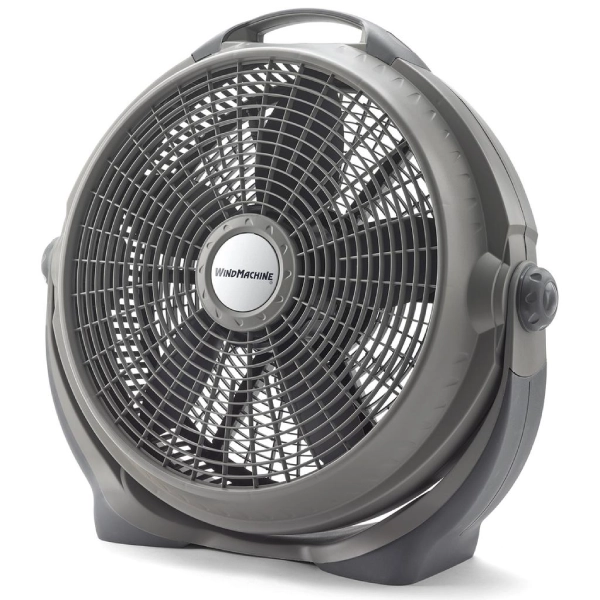
The Cyclone 20 inch air circulator at $49.99 is built to push air across a room and keep it mixing, which is what you want for a stuffy space or for helping a heating or cooling system reach further. The 20 inch high velocity floor fan from $79.99 is the heavier duty version of the same idea.
A tower fan is a different proposition. The Pinnacle 40 inch DC tower fan at $119.99 trades raw air movement for a slim footprint and, because it uses a DC motor, usually for lower noise and lower power draw than an equivalent AC model. For a bedroom that trade is usually worth making.
If you want one sentence on it: buy an air circulator for a room that feels stale, and a tower fan for a room where you want to sleep.
The Heaters
Heater | Price | Note |
|---|---|---|
MyHeat Max 9in personal | $34.99 | Desk sized |
13in ceramic console | $49.99 | Low and wide |
Artisan 16in tower | $59.99 | The everyday pick |
Whirlwind 13.5in | $69.99 | Compact, higher price |
27in bladeless tower | $69.99 | 30% off when we looked |
From $34.99 for a desk heater to $69.99 for the bladeless tower.
The heater line is where the pricing gets interesting, because it is not simply bigger equals dearer.
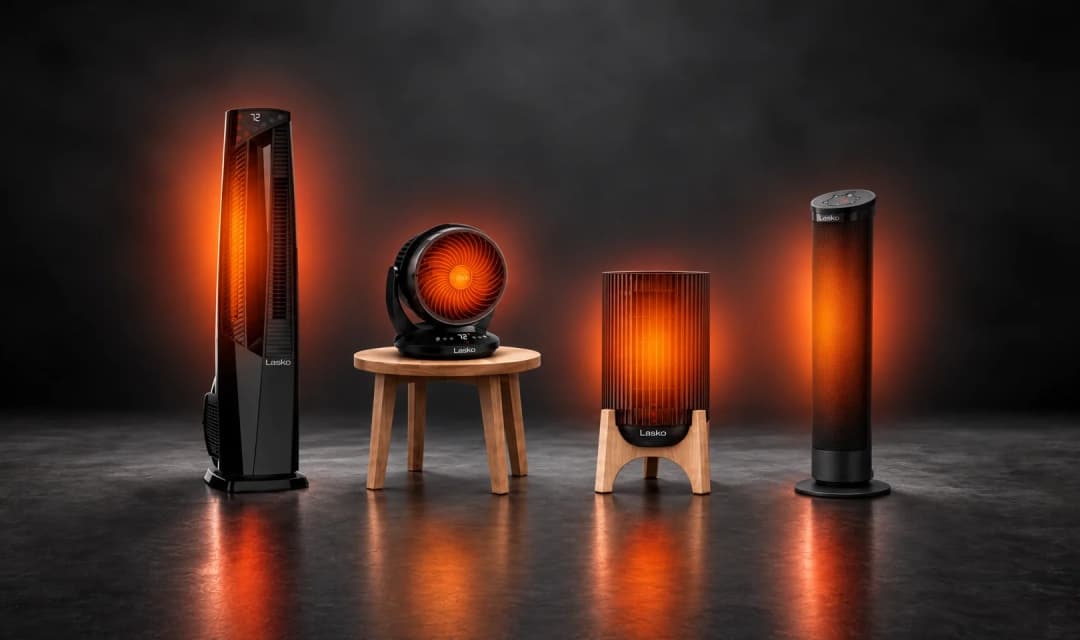
The MyHeat Max at $34.99 is a personal desk heater. The 13 inch ceramic console at $49.99 is low and wide for a floor. The Artisan 16 inch ceramic tower at $59.99 is the standard everyday choice for a single room.
Then the Whirlwind at 13.5 inches is $69.99, which is $10 more than the taller Artisan, so height is not what you are paying for. The 27 inch bladeless tower is also $69.99 and was showing 30% off when we looked, which made it the best value heater on the page at that moment.
Every one of these is a supplemental space heater for a single room. None heats a house, and running several at once is an expensive way to discover that.
The All Season Option, Tested
One model, independently tested | Finding |
|---|---|
Model | DUO Comfort style hybrid, FHV820 |
Arrived | Assembled, remote needs 2 AAA |
Heating | Warmed a cold home office |
Noise on highest heat | Had to turn it down for calls |
Noise on fan setting two | Did not keep anyone awake |
Not a replacement for | Air conditioning |
One reviewer found it heated well and was noisy on the top setting.
The hybrid fan and heater is the most interesting product here because it earns its storage space twice a year, and one publication actually tested it.
The reviewer reported it arrived assembled and needed only two AAA batteries for the remote, that it warmed a chilly home office effectively enough to be moved into the hallway, and that on fan setting two it kept rooms comfortable overnight without keeping anyone awake.
The criticisms were specific. It is noisy on its highest heat setting, enough that the reviewer turned it down during video calls and moved it away from the desk, though they described the noise as entirely tolerable. It also does not cool, only heats or circulates.
That reviewer received a sample from the brand, which we mention so you can weigh it. Their criticisms were still published, which is the thing to look for.
The Claims, Checked
The claims on the homepage | How they hold up |
|---|---|
Number one fan and heater brand | Cited to retail tracking data |
An American company since 1906 | 120 years, consistent |
Where products are made | Not stated |
Safety certification | Not mentioned on the homepage |
Tip over switch on heaters | Listed as a feature |
The number one claim is cited. Where it is made is not stated.
Two of these claims are better than most brands manage. Two are gaps, and this Lasko review would be incomplete without naming both.
The number one fan and heater brand claim is cited to retail tracking data for a stated twelve month period, which is a sourced claim rather than a slogan, and we will credit that because most brands do not bother. The 1906 founding gives 120 years, which matches the figure on the site.
What the homepage does not say is where the products are made. An American company since 1906 is a statement about the company, not about manufacturing, and those are different things that marketing often blurs. If country of origin matters to you, ask.
The homepage also does not mention any safety certification. We want to be careful here, because electric heaters sold through major US retailers are normally certified by a recognised laboratory, and the absence of a mention on a homepage is not evidence of anything. It is simply information we would expect to find and could not, and it is worth checking on the listing for the specific model you buy.
The Stock Problem
Availability when we looked | Count |
|---|---|
Products listed with a price | 14 |
Marked sold out | 9 |
That is | 64.3% |
Still available | 5 |
What it means | Buy when you see it, not when you need it |
Nine of fourteen listed products were sold out.
This is the most practical issue we found, and it will affect your shopping far more than any specification on any space heater in the range.
Of fourteen products showing a price when we looked, nine were marked sold out. That is 64.3% of what we could see, and it included several of the heaters.
Seasonal appliances work like this everywhere, since heaters sell out in a cold snap and fans sell out in a heatwave. The practical consequence is that this is a category to buy out of season, when it is both available and discounted, rather than on the day you need it.
Buy heaters in spring and fans in autumn
Check the certification on the specific listing
Match the product to the job, not to the price
Never run a space heater on an extension lead
Check the Price, and the Website
Price check on one model | Figure |
|---|---|
On the brand's own site | $119.99 |
Quoted by a reviewer on a marketplace | $150 |
Difference | 25.0% |
Range across the line | $29.99 to $119.99 |
That spread is | 300% |
One model was $119.99 direct and quoted at $150 elsewhere.
Two things are worth doing before you pay. Both take a minute.
First, compare. One model listed at $119.99 on the brand's own site was quoted by a reviewer at $150 on a marketplace, a difference of 25.0%. Direct is not always cheaper. In that case it was.
A search result caution | Detail |
|---|---|
The official site | lasko.com |
What else appears in results | Several near identical domains |
They use | The same slogan and styling |
We are not accusing anyone | We cannot verify who runs them |
What to do | Check the domain before paying |
Several near identical domains appear alongside the official site.
Second, check the address bar. While researching this we found several domains in search results using the same slogan and a very similar name to the official site, which is lasko.com.
We cannot tell you who runs those sites and we are not accusing anyone of anything, because we have no evidence either way. We are telling you they exist, because a confusing domain is the sort of thing worth noticing before you enter card details, and the safest route is the brand's own site or a major retailer you already use.
Final Verdict
Category | Score |
|---|---|
Price For What You Get | 9 / 10 |
Range And Choice | 9 / 10 |
Brand Track Record | 8.5 / 10 |
Published Technical Detail | 4.5 / 10 |
Stock Availability | 4 / 10 |
Overall Score | 7.5 / 10 |
Seven and a half out of ten. For $29.99 to $119.99 this is a sensible, long established range covering almost every air moving and supplemental heating job in a home, from a 120 year old company whose market position claim is actually cited to retail tracking data rather than asserted. The weaknesses are informational and practical. The site does not state where products are made or mention safety certification, 64.3% of the products we looked at were sold out, and one model was 25.0% dearer on a marketplace than direct. Buy out of season, match the product to the job rather than the price, and check the domain before you pay.
FAQs
How much do Lasko fans and heaters cost?
The products we saw ran from $29.99 for a humidifier to $119.99 for a DC tower fan or the hybrid fan and heater, a spread of 300%.
Which one should I buy for a bedroom?
A tower fan rather than an air circulator. The Pinnacle 40 inch DC model at $119.99 is the quieter, slimmer type, and a DC motor normally means less noise and less power.
Do the heaters heat a whole house?
No. These are supplemental heaters for a single room. Running several is an expensive way to heat a house.
Are the products made in the USA?
The site describes an American company founded in 1906 but does not state where products are made. Those are different claims, so ask if it matters to you.
Why is everything sold out?
Nine of fourteen products we saw were sold out, which is 64.3%. Seasonal demand drives it, so buy heaters in spring and fans in autumn.
Is the hybrid fan and heater any good?
One publication that tested it recommended it, finding it heated a room well and was noisy on the top heat setting but tolerable on lower ones. It does not cool.