Groundies Active Review: The Same Shoe, Three Different Deals
On This Page
- Three retailers, three return windows
- One contradiction in the brand's own shipping terms
- The stack height, worked out from the brand's own numbers
- Two internal length charts that disagree
- The specification, which is better than average
- The size range is lopsided
- What the reviewer actually did with them
- The prices, and why they are not comparable
- Our reading
The shoe is the same shoe. The box it arrives in is the same box. What changes, depending on which website you click buy on, is how long you have to change your mind, who pays to send it back, what fee comes out of your refund, and whether you have a warranty at all.
That spread is the most useful thing in this Groundies Active review, so we will start there.
Three retailers, three return windows
Retailer | Window | Return shipping | Deduction | Warranty |
|---|---|---|---|---|
Brand US store | 30 days | Buyer pays for refunds | 10 USD restocking | 12 months |
UK outdoor retailer | 100 days | Free label provided | 3.99 GBP processing | None stated |
Finnish specialist | 14 days | Buyer pays outside Nordics | 4.90 or 7.90 EUR | None stated |
Fourteen days against one hundred is a 7.1 times spread on the identical product. That is not a small difference in service levels. It is the difference between a return window that shuts before you have finished breaking the shoes in and one that lets you decide across a whole season.
And look at the right-hand column. Only the brand's own store offers a warranty, stated as 12 months against manufacturing defects and excluding misuse, accidents, normal wear and final sale items. The two independent retailers give no term at all. One of them answers the warranty question with the sentence that it is always there to help, which is hospitality rather than a policy.
So the trade is explicit once you lay it out. Buy from the brand and you get a 12 month warranty and a 30 day window, and you pay return postage plus a 10 dollar restocking fee if you change your mind. Buy from the UK retailer and you get more than three times the window and a free return label, and you give up the warranty and 3.99 pounds. Neither is wrong. Nobody tells you that you are choosing.
The fees are small in absolute terms and worth naming anyway. Ten dollars on a 120 dollar shoe is 8.3 percent of the purchase. The 3.99 pound processing fee and the 4.90 to 7.90 euro handling fee are both at the modest end of what we have measured in this category, and all three are deducted from the refund rather than charged separately, which is at least transparent.
Two other terms are worth pulling out. The UK retailer states plainly that it no longer offers exchanges at all, which on a shoe the brand itself says runs a full size small is a real limitation. The Finnish retailer offers free exchanges, but only within Finland, Sweden and Denmark, one per paid order, subject to stock. And the Finnish retailer defines outdoor use strictly, counting walks on grass, gravel and in woodland as outdoor wear that voids the return.
One contradiction in the brand's own shipping terms
The brand's United States shipping page states a flat 5 dollars per pair of shoes within the continental United States, delivered in one to five business days by one of two carriers, with no post office boxes.
A banner on the same site advertises free shipping on orders over 120 dollars.
The shoe costs exactly 120 dollars, with prices stated as excluding tax. So the shoe does not clear its own site's free shipping threshold, and the shipping page that sets the rate does not mention the threshold at all.
That is almost certainly a promotion layered over a static policy page rather than anything deliberate. It is also the sort of thing worth a screenshot before you order, because a one cent shortfall on a threshold is an annoying conversation to have afterwards.
The restocking fee has the same problem in reverse. The 10 dollar figure appears on the shipping and payment page and does not appear on the refund policy page. Two pages on one site, one with a fee and one without.
The stack height, worked out from the brand's own numbers
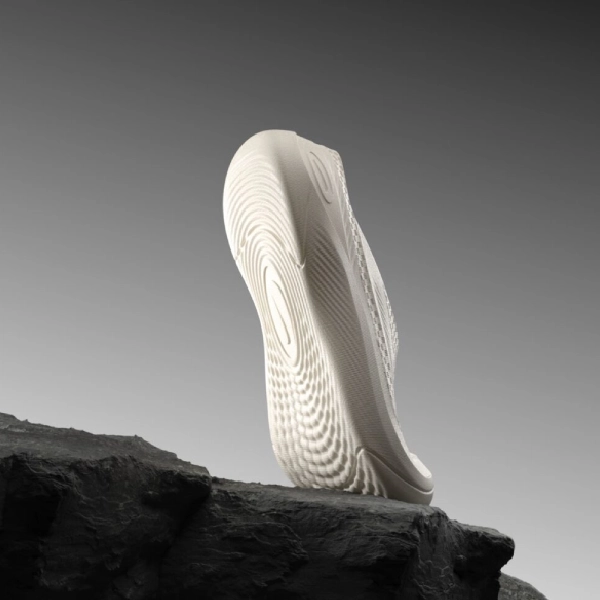
No retailer page states a stack height. All of them state the sole in two parts.
The sole is published as a 2.0 millimetre base with a 2.5 millimetre tread or profile, under a named sole technology. Add them and the sole is 4.5 millimetres.
The independent reviewer, testing the non-knit version, publishes a stack height of around 8.5 millimetres with the insole in. Subtract the 4.5 millimetre sole and the insole is about 4 millimetres, which is 47.1 percent of the total stack.
That is our arithmetic bridging a published gap, and it is worth doing because it answers the question a barefoot buyer actually has. You stand on roughly 8.5 millimetres as the shoe comes out of the box, and on roughly 4.5 if you take the insole out. The reviewer notes the non-knit model ships with two insoles, so there is a third setting in there too.
For context against the category, a 4.5 millimetre sole is genuinely thin and an 8.5 millimetre total is middling. Brands we have measured recently sit between 3 and 5 millimetres on the sole alone, and one publishes a 6 millimetre winter stack. So this shoe is thin under the rubber and average once you include what it ships with.
The 2.5 millimetre tread figure is the only outsole geometry anyone gives. No lug depth beyond that, no rubber compound named, and no toe box width in millimetres on any page, which leaves anatomical toe box as a phrase rather than a measurement.
Two internal length charts that disagree
This is the gap that will cost somebody an order, and it exists because the brand and one of its retailers both publish an internal measurement and do not match.
EU size | Brand chart | Retailer chart | Difference |
|---|---|---|---|
36 | 23.4 cm | 23.0 cm | 4 mm |
43 | 27.9 cm | 27.6 cm | 3 mm |
A 3 to 4 millimetre disagreement sounds trivial until you put it against the size step. Across EU 36 to 43 the brand's own chart moves 4.5 centimetres over seven sizes, which is about 6.4 millimetres per size.
So the two charts disagree by over half a size on the same shoe.
That sits on top of a fit warning that is already doing heavy lifting. The brand's product pages say the model runs one size smaller. The UK retailer says it runs a full size small. The reviewer went up from his usual EU 43 to a 44 and says the brand recommends a full size up.
Everybody agrees you should size up. Nobody agrees by exactly how much, and the two internal charts that should settle it do not agree either. If you are ordering, work from the brand's own chart, add the reviewer's experience, and buy from whichever retailer in the table above offers an exchange.
The brand's own men's chart does also publish internal width, running from 8.6 centimetres at EU 36 up to 9.7 at EU 43. That is a useful figure and the page does not label it as a toe box width, so we are not treating it as one.
The specification, which is better than average
Having been hard on the terms, the product documentation deserves credit in three specific places.
The upper is stated as polyester with 20 percent recycled content. A percentage, not a claim. We looked at a competitor last week whose recycled rubber claim carried no figure at all.
Designed in Germany and made in Vietnam, both stated on the brand's own pages rather than buried.
A washing instruction with a temperature. One retailer gives 30 degrees Celsius, insole removed, in a laundry bag, with no spin. That is the only machine wash instruction in the set and it is specific enough to follow.
The rest of the published figures run as follows. Zero drop, stated on every page. A seamless knit upper in recycled polyester with a microfiber lining. A removable extra insole at one retailer. A weight of 213 grams at a size 39 for the Active Knit, published by the Finnish retailer alone.
That weight figure is the only one anywhere for the knit model, and it tells you something when set against the reviewer's figure for the non-knit Active of 9.85 ounces at a size 10, which converts to about 279 grams. The non-knit is roughly 31 percent heavier, which is what you would expect from a textile and thermoplastic upper against a knit one. Different sizes and different models, so treat that as a rough indication rather than a measurement.
Vegan appears as a tag on the brand's pages with no certifying body named. No other certification appears anywhere.
The size range is lopsided
Women's sizing runs US 5 to 11, which is EU 36 to 43, with exactly one half size in the range at 10.5. Men's runs US 7 to 14.5, which is EU 40 to 49, with half sizes at the top.
One half size across seven women's sizes is thin, and it matters a great deal on a shoe that everybody agrees runs small. If sizing up by a full size overshoots you, there is usually nothing in between to land on.
Stock was patchy at the top of the men's range when we looked, with the white colourway sold out in US 14.5 and the black sold out in both 14 and 14.5. The women's white had no US 11. One retailer also describes the men's model as sold in sizes 44 to 48 while the brand's own page lists EU 40 to 49, which is another small mismatch to check before ordering.
What the reviewer actually did with them
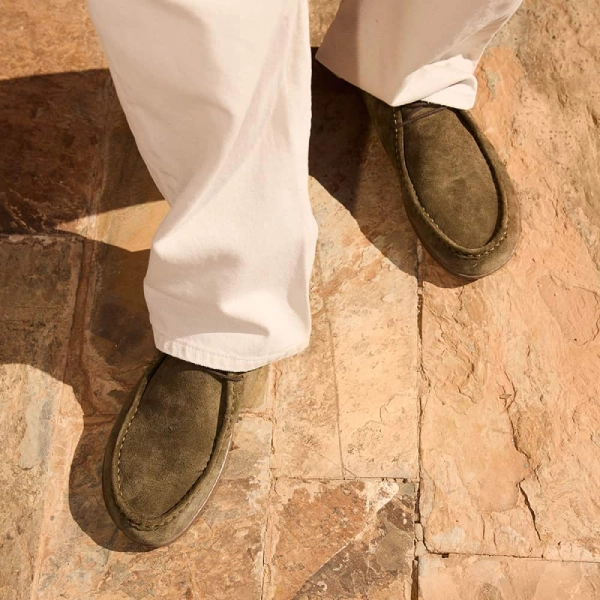
This is the most thorough independent test we found in this category and it is worth reporting properly, with the caveat that he tested the non-knit Active.
He wore them for lifting, including deadlifts, Romanian deadlifts, lunges, split squats, kettlebell work and cleans. He used them for cross-training with skater strides, lateral box jumps and sled pushes on turf. He ran in them on concrete and did 400 to 800 metre intervals on grass. He also wore them daily. He does not state a total wear time.
His sub-scores are Stability 4.0, Versatility 4.6, Durability 4.2 and Quality 3.6, with an unlabelled 4.0 that is probably the overall.
Quality at 3.6 is the lowest number on that card and Versatility at 4.6 is the highest, a gap of 27.8 percent. A reviewer who rates a shoe highly for range of use and lowest for how well it is made is telling you something specific, and it lines up with his written criticisms.
Those criticisms, in his words and ours: the toe crease was uncomfortable during break-in, the toe box is low-volume and tapered and may be snug for wide feet, the textile and thermoplastic upper limits breathability and can run hot, the shoe slipped on turf during sled pushes, and the elastic lacing comes untucked and laces unevenly.
His clearest piece of advice is a limit rather than a complaint. For runs over a mile, he says pass on this shoe. That is a useful line for anyone considering it as a running option, and it is the kind of boundary brand copy never draws.
On durability he reports no failures, saying he has yet to have issues doing skater strides and lateral box jumps. No failure report after that use pattern is a reasonable signal, and it is still short of a long-term durability test, which he does not claim to have done.
The prices, and why they are not comparable
The same Active Knit appeared at 120.00 US dollars with prices stated as excluding tax, at 58.68 pounds reduced from 102.95 with duties and taxes stated as included, and at 119.00 euros. The reviewer quotes the non-knit Active at around 129.90 euros.
We are not going to convert those into a single currency and declare a winner, because one excludes tax and another includes duties, and the comparison would be misleading. What we can say is that the 58.68 pound price is 43.0 percent off that retailer's own 102.95 pound reference, which is a deep discount on a current model and the best-looking number in the set at the moment we looked.
Free shipping thresholds differ too. The UK retailer gives free delivery from 85 pounds with 4.49 pounds standard, so a single discounted pair does not clear it. The Finnish retailer charges from 3.90 euros with no threshold stated. And the brand's own store has the 120 dollar threshold problem described earlier.
Our reading
The shoe looks like a good one. A 4.5 millimetre sole published as a split that adds up, a roughly 8.5 millimetre stack with the insole in, 20 percent recycled polyester stated as a percentage, zero drop, a washing temperature, Germany and Vietnam both named, and an independent reviewer who put it through lifting, cross-training and short runs without breaking it.
The buying decision is not about the shoe. It is about which till you walk to, and the table at the top of this article is the whole answer. A 14 day window with no warranty, a 30 day window with a 12 month warranty, or a 100 day window with no warranty and no exchanges.
Our own order of preference, for what it is worth, is the longest return window if you are unsure about sizing and the brand's own store if you are confident, because on a shoe everyone agrees runs a full size small the window is worth more to most buyers than the warranty. Manufacturing defects on a knit sneaker are a great deal rarer than ordering the wrong size.
Three questions before you order. Ask your chosen retailer the return window and the exact deduction, because all three differ and all three take it from the refund. Ask whether an exchange is available, since one retailer has stopped offering them entirely. And work your size from the brand's own internal length chart rather than a conversion, then check it against the retailer's chart, because on the sizes we compared the two were more than half a size apart.