
Lovevery vs KiwiCo 2026 – Which Subscription Box Is Better for Kids?
On This Page
- About Lovevery
- About Kiwico
- What to Consider
- Age range
- Concepts
- Design and safety features
- Flexibility with subscriptions
- Extras
- Accessibility
- Lovery vs Kiwico: How Do The Subscriptions Work?
- Lovevery Gifting and Registry vs Kiwico Gift Guide Review:
- Give your own gift
- Group gift
- Baby wish list
- Lovevery vs Kiwico: Quality
- Lovevery vs Kiwico: Price & Value
- Lovevery subscription models:
- Kiwico subscriptions:
- Lovevery vs Kiwico: What do Customers Think?
- Lovevery:
- Common customer feedback
- Lovevery vs Kiwico: Shipping & Returns
- Who Will You Shop With?
About Lovevery
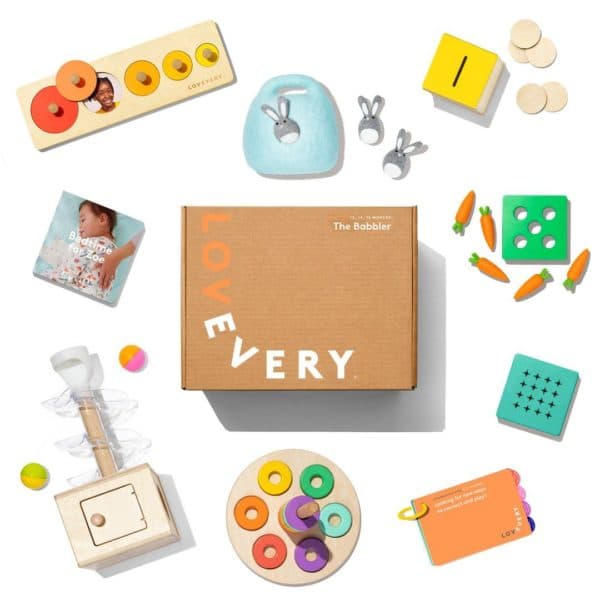
Smart ideas start in the early stages. Lovevery was developed to promote child development and offers a wide range of play sets, from building blocks to wooden rattles. They are designed for babies and toddlers, and I can tell you: these toy sets look educational and are fun.
Founded in 2015 and based in Idaho, the brand is the brainchild of founders Jessica Rolph and Roderick Morris. The idea to develop stage-based toy sets was inspired by a doctoral thesis on the neurological development of young children. Impressed by what they had learned, Rolph and Morris felt it was necessary to share this information with parents.
Since its inception, Lovevery has quickly found success with its innovative company mission—which
is best illustrated by its collection of trophies. The company has been recognized by Time Magazine, Parent's Choice, and Fast Company.
About Kiwico
Kiwico believes that imagination, creativity, and innovation can be nurtured from an early age. This educational resource aims to stimulate the intuition of babies and preschoolers. With a variety of play boxes ranging from science projects to environmentally-focused sets, the company seeks to inspire future problem solvers.
This is thanks to founder Sandra Oh Lin, who launched Kiwico in 2011. Based in sunny Mountain View, California, the company has already shipped over 25 million play boxes worldwide. With such a large number, it's no wonder that various media outlets have taken notice of Kiwico's success, including People.com, The New York Times, and USA Today.
Contrary to popular belief, play is not just for entertainment. From an early age, children begin to develop important life skills, whether it's vocabulary, motor skills, hand-eye coordination, or basic problem-solving abilities.
With this in mind, it's best to encourage their learning by implementing some routine projects, which is what Lovevery and Kiwico both specialize in. But here comes the million-dollar question: which company should you support?
With this comparison between Lovevery and Kiwico, I want to help you solve this problem. I will give you a detailed overview of both brands by taking a close look at their products, company goals, prices, and value to help parents make this important decision.
What to Consider
Age range
Child development can be divided into three main categories: early childhood, middle childhood, and adolescence. Naturally, project kits should be organized according to developmental stages. Lovevery seems to target children aged0 to 3.
Kiwico, on the other hand, offers a broader spectrum—for children aged 0 to 14. While it is important to consider your child's age, you also need to plan ahead. For example, how long should they work on these activities?
Concepts
Like any good children's book, developmental projects should also offer some kind of learning effect. Lovevery's play sets are designed to promote early childhood development. This typically includes improving motor skills, hand-eye coordination, and basic cognitive functions.
Since Kiwico covers a wider age range, activities for preschoolers typically involve more complex problem solving. These typically include school-based learning content such as science experiments and simple crafts.
Design and safety features
It's only natural for parents to worry. Fortunately, the brands I'm reviewing today are completely safe to use. If anything, some activities may require adult supervision if your child is still in the phase where they lick everything.
In terms of design, I can say with certainty that both Lovevery and Kiwico Crates are real eye-catchers. At best, they can keep your child entertained for hours.
Flexibility with subscriptions
The best subscription models should offer a certain amount of flexibility. It should be easy to pause, skip, and cancel memberships. In addition, it is advantageous if customers can choose the frequency of their deliveries and set their own shipping schedules. Don't worry, I'll go into more detail about this in the next few sections of this comparison between Lovevery and Kiwico.
Extras
Parents love to be involved in their children's education. Therefore, it is naturally advantageous if the company in question offers additional resources for caregivers. These can include guides, advice columns, and FAQs.
Accessibility
You know the saying: it takes a village to raise a child. But can the village accommodate multiple children from around the world? That's a more important question to ask.
It’s always ideal if the company in question is highly accessible, whether that be in price or location. If they’re not available in certain countries, they should at least make up for it by partnering with retailers that can carry their products, such as Amazon or Walmart.
Lovery vs Kiwico: How Do The Subscriptions Work?
Problem solving is the core business of Lovevery and Kiwico, but that shouldn't apply to the sign-up process. Subscription models should be easy to understand, and luckily for you, I've compiled a list of points to consider when choosing a membership. And just a heads up: both models are relatively easy to understand.
Let's start with Lovevery. All memberships begin with providing some preliminary information. In this case, parents must enter their child's name and birthday. The brand then selects the play sets based on the child's age.
Once you have a general overview of the contents of each package, customers must select their subscription plan. This includes a prepaid package with 3 or 4 kits or a recurring package where members can pay per delivery.
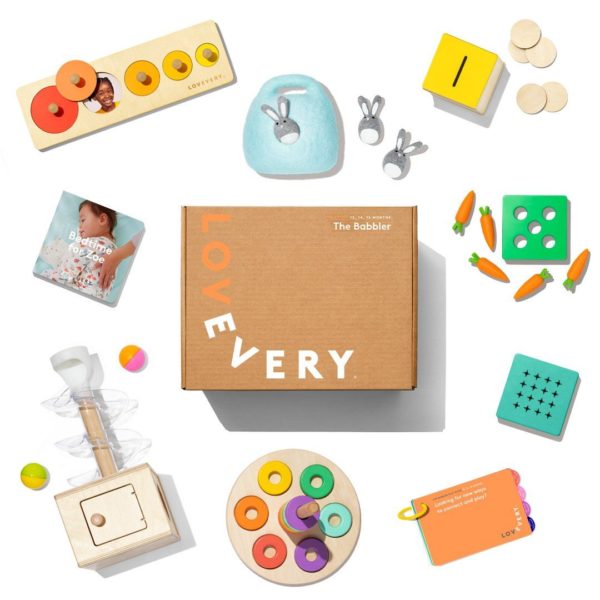
As for the details, there are a few general things to keep in mind when signing up for a Lovevery subscription:
- Customers can pause and skip their membership at any time.
- You cannot purchase a Play Kit individually. Parents must sign up for a subscription.
- All packages include an activity guide for parents.
- Members cannot customize their own Play Kit package.
- You do not have to return your Play Kits.
- Membership continues until the brand no longer has recommended Play Kits in stock because your child is getting older (or if you decide to cancel).
The sign-up process at Kiwico is very similar to Lovevery's, but offers a little more flexibility in terms of customization. In addition to providing their child's name and birthday, parents can choose which project box they would like to receive.
The brand recommends a few activities based on your child's age, but you can also browse boxes outside of these suggestions. Customers then need to choose how long they want to keep their subscription.
This includes a monthly, 3-month, 6-month, or annual membership. Finally, parents can add a specially selected book to their order. This is essentially free learning material.
As with its competitor, this comparison between Lovevery and Kiwico also lists some important points about the Kiwico subscription:
- Customers can add additional subscriptions to their order.
- You do not need to sign up for a membership to purchase a project kit.
- Members can “rotate” product lines when they want to order a new set of activity boxes.
- Parents can cancel or pause their subscriptions at any time.
- Subscriptions include free shipping, exclusive promotions, and automatic enrollment in the brand's loyalty program.
- Project boxes ordered through a subscription cannot be returned. This does not apply to regular orders placed in the store.
I think we can all agree that both brands make the sign-up process relatively easy. However, there are differences in terms of customization options, subscription duration, and flexibility.
On the one hand, Lovevery is a great membership program for parents who are unsure how to properly nurture their child's developmental skills. Everything is recommended, which prevents customers from ordering the wrong play set.
Kiwico offers a higher degree of flexibility and customization. For one thing, you don't have to sign up for a membership to purchase the project kits. In addition, customers are free to choose which activities they want to include in their order.
Although the brand recommends certain products depending on age, you can choose any package, even if it is not intended for your child's age. This is an excellent alternative for anyone who does not want to be restricted by binding subscriptions.
Did I mention that both brands offer gift sets for parents? You can find out more about this in the next section of this comparison between Lovevery and Kiwico.
Lovevery Gifting and Registry vs Kiwico Gift Guide Review:
Ah, it's that time of year again. No matter what holidays you celebrate, the weeks leading up to New Year's are a time for gift-giving. Dear parents, I would like to encourage you to do more than just buy the usual Barbie doll and toy car.
The gift subscription from Lovevery and Kiwico complements your existing gift and offers educational value for babies and preschoolers. Don't worry, your children won't sulk or roll their eyes when they unwrap their project kits. Everything is designed to be highly stimulating.
At Lovevery, parents can choose to give their own Play Kit as a gift, purchase a group package, or create a baby wish list. To make it easier to compare, below is a list of all the options.
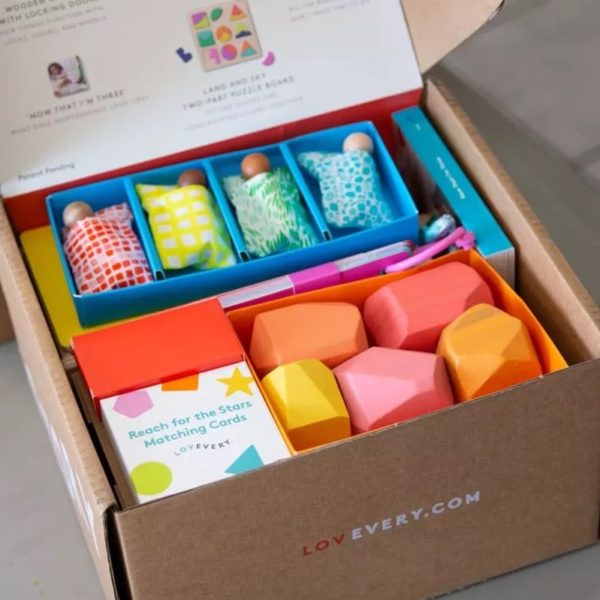
Give your own gift
- Customers can give a Lovevery subscription as a gift.
- Gifts range from play sets, play mats, and building block sets to gift cards.
- With play sets, customers can choose how many packages they want to send. They can also add a play mat and gift wrapping to their order.
- All play sets are pre-recommended.
Group gift
- A subscription that everyone contributes to.
- Group members can contribute an amount of their choice. Together, this provides the funding for the next play set.
- The creator determines when the package is shipped and when the gift campaign ends.
- Partially funded play sets are converted into a gift code that the creator can use for a subscription program.
Baby wish list
- Requires a group action. Everyone contributes a certain amount to the products desired on each list.
- Customers can choose which play sets they want to crowdfund. This includes the play center.
- You can select the end date for the baby wish list.
- Any surplus funds are combined into a gift voucher.
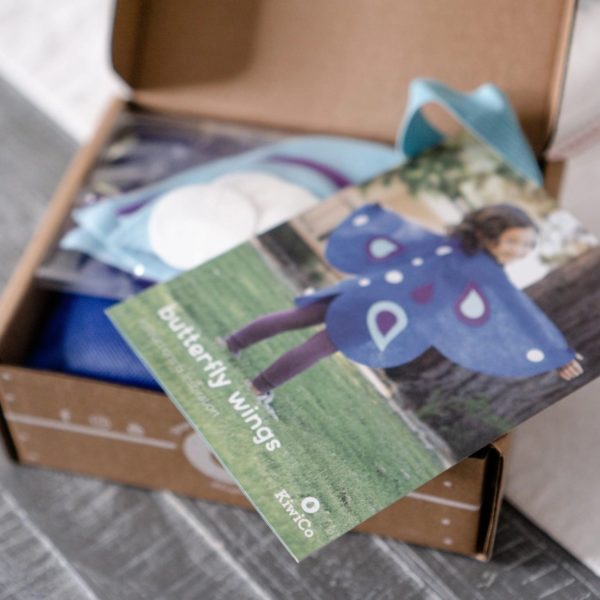
Gift giving at Kiwico is divided into one-time purchases and subscriptions. Customers can choose whether they want to pay for a membership or buy individual project boxes in the shop. As a bonus, buyers can narrow their search by age and price range. If you are looking for something specific, all packages are sorted by activity.
These range from artist, scientist, engineer, technician, to biologist. As for memberships, customers can opt for a monthly or annual subscription. It's worth noting that everything is offered as a recurring payment. Members cannot pay shipping costs in advance.
Obviously, both brands offer some significant advantages depending on the type of customer. For those who prefer group gifts, Lovevery offers a clear and clean way for recipients to receive play kits through crowdfunding.
Lovevery vs Kiwico: Quality
Plastic? No, thank you. These days, parents are looking for more sustainable alternatives when it comes to buying toys and baby equipment. Fortunately, Lovevery and Kiwico are implementing a number of eco-friendly initiatives that are safe for your child and the environment—but don't just take our word for it.
If you're concerned about the quality of the project kits, this comparison between Lovevery and Kiwico will give moms and dads some much-needed peace of mind.
Lovevery takes great pride in the quality of its play sets. All products are non-toxic and completely safe to use. In addition, all materials are rigorously tested by an independent body to ensure they meet specific guidelines.
In terms of sustainability, Lovevery uses environmentally friendly resources such as organic cotton, bio-based plastic, FSC-certified wood, OEKO-TEX fabrics, and soy-based ink. According to the company's mission statement, 90% of its manufacturing processes are to be environmentally friendly and ecologically conscious by 2025.
Kiwico is not as transparent as Lovevery, but you can rest assured that some project kits are manufactured sustainably. For example, all boxes are packaged with less paper and filling material. Only cardboard from responsibly managed forests is used, which is always a big plus.
Regarding materials, Kiwico typically uses wood and reusable resources for their toy sets and books. Art supplies such as clay, paint, and ink are completely non-toxic, in case your baby has a taste for anything but food.
Ultimately, quality depends on your overall standards. But I think we can all agree that Lovevery and Kiwico are commendable in terms of materials and sustainability. In our opinion, there are contrasts in terms of corporate transparency. It is always insightful when a brand is relatively open about its manufacturing processes and the level of its quality control.
Lovevery vs Kiwico: Price & Value
You're probably thinking, “Project kits? Pah, I can make those at home for free.” So does it really make sense to pay for a monthly delivery of activity boxes for your children? To answer this question, this comparison between Lovevery and Kiwico presents the prices of both subscription models as well as the prices of the individual boxes.
Lovevery subscription models:
- 3-kit prepaid model: $342 (saving of $18), equivalent to $38 per month
- 4-kit prepaid model: $432 (saving of $48), equivalent to $36 per month
- Monthly model: $120 per kit. (Shipped every 3 months, equivalent to $40 per month)
- Additional extras such as “The Play Gym” and “Home Collection”: $7 to $400
Kiwico subscriptions:
- Monthly subscription: $23 per month (total savings of $9)
- 3-month subscription: $21 per month (total savings of $9)
- 6-month subscription: $19 per month (total savings $78)
- Annual plan: $18 per month (total savings $173)
- Environmental sciences: Oil spill cleanup: $30
- Atomic bead maze: $35
- Baking and fraction set: $50
At first glance, the Lovevery subscription seems to be the more expensive of the two options. However, you should keep in mind that you are paying for three play sets every month.
Membership ends when your child reaches a certain age, as the brand only caters to newborns and 3-year-olds. Kiwico seems to be more affordable for price-conscious parents, as members only receive one box per delivery.
Considering the quality, Lovevery and Kiwico are worth the investment. Yes, you can make these kits yourself, but let's be honest: as a parent, do you really have the time?
Lovevery vs Kiwico: What do Customers Think?
Lovevery and Kiwico seem to be promising brands with subscription models, but how do they fare in terms of real customer reviews? As busy parents, you probably don't have much time to thoroughly compare the different providers. That's why I've put together some important points to consider when choosing a subscription.
Lovevery:
- Over 2,172 reviews in total
- The Play Gym: 1,723 reviews with 4.9/5 stars
- The Block Set: 1,099 reviews with 5/5 stars
- The Organic Cotton Play Tunnel: 460 reviews with 4.9/5 stars
- Amazon for The Play Gym: 143 reviews with 4.6/5 stars
- Facebook: 247 reviews with 4.2/5 stars
- My Subscription Addiction: 4.5/5 stars with 2 reviews
Common customer feedback
- Exceptional product quality
- Well-made and durable in terms of construction
- Popular with children and parents
- Considered a great way to encourage early learning
- Some issues regarding customer service and product sizes
Kiwico:
- Holds over 29k reviews on its website
- The Environmental Science: Oil Cleanup set: 7 reviews with 5/5 stars
- The Atom Bead Maze: 3 reviews with 5/5 stars
- The Baking and Fractions set: 1 review with 5/5 stars
- Trustpilot: 3,664 reviews with 4.5/5 stars
- Better Business Bureau: 113 complaints with 56 closed
- My Subscription Addiction: 23 votes with 3.8/5 stars
Common customer feedback:
- High-quality projects that offered educational value
- Creatively designed and fun for kids to play with
- Offered bonding time for families
- Reported issues with customer service and delivery times
- Some frustrations in canceling subscription plans
Of course, there is always room for improvement when it comes to customer service and delivery. It's not uncommon for a brand to struggle with shipping issues and general customer support, but it's always good to keep this in mind.
Based on the feedback and numbers this review of Lovevery and Kiwico has received, I can confidently say that they are definitely worth checking out.
Lovevery vs Kiwico: Shipping & Returns
Here's a common nightmare: you've fallen in love with a particular brand – but are immediately disappointed when you find out that it doesn't offer international shipping. There are ways to mitigate this disappointment, and to do so, you need to thoroughly review the shipping and return policies.
To save you time, this comparison between Lovevery and Kiwico provides an overview before you decide on a subscription.
Lovevery:
- Free ground shipping on orders $75 or more
- Standard delivery costs $6
- Only available in Canada and the United States
- Depending on location, packages typically arrive within 5 to 14 business days
- Offers a 30-day return window with a prepaid shipping label
- Play Kits do not have to be returned
- No glaring reports about delayed or unfulfilled orders
Kiwico:
- Free shipping for all subscription plans
- In terms of individually-priced products, complimentary delivery is available for orders $49 or more
- Provides international shipping (Deluxe boxes costs an additional $2)
- Offers a 60-day return window for regular store items with no prepaid label
- Memberships are ineligible for returns
- Some frustrations in terms of delayed deliveries
Lovevery targets customers in North America, while Kiwico is an alternative for those who don't live in the Western Hemisphere—right?
In Lovevery's favor, some of their products are available from partner retailers such as Amazon and Target. Again, Kiwico is the cheaper option of the two, as they offer free shipping on all their subscriptions.
Who Will You Shop With?
The purpose of this Lovevery vs. Kiwico review was not to pick a winner. I wanted to provide customers with a clear comparison of the pros and cons of both membership plans. I hope you now have an overview of what both companies have to offer, but if not, let's start from the beginning.
Lovevery teaches basic life skills. These include basic motor skills, level 1 problem solving, body awareness, and sensory processing. The offering is not complicated, as all play sets are suitable for newborns and toddlers. The subscriptions are straightforward and quite affordable considering the educational value.
Kiwico caters to a wider age range. Of course, their crates are a bit more advanced compared to Lovevery. They require critical thinking, as some activities involve difficult topics such as environmental protection and basic math.
As mentioned earlier, Kiwico is more affordable. Their membership plans are also very flexible, which is ideal for those who don't like to commit. It's a round full of ones, but you probably already knew that.