Birdfy Review: The Subscription Question Nobody Answers Properly
On This Page
- What Birdfy actually is
- The first paywall: AI is a hardware choice, not an app choice
- The second paywall: Birdfy Membership
- How the two paywalls interact, and why that matters
- Which model to actually buy
- The storage limitation people miss
- What owners actually complain about
- Warranty and returns
- Birdfy or Bird Buddy?
- FAQs
- Verdict
Smart bird feeders are one of those products that look simple in the ad and get complicated at checkout. Birdfy is the biggest name in the category after Bird Buddy, the cameras are good, and the bird footage genuinely is as charming as it looks.
But there are two separate paywalls in this product, they work differently, and the one that matters most is decided when you buy the hardware, not later. Get it wrong and you are paying $4.99 a month for the feature you thought you already owned. That is what this review is mostly about, because almost nothing written about Birdfy explains it clearly.
What Birdfy actually is
Birdfy is the bird products brand of Netvue Technologies, a Shenzhen-based company that built its business making home security cameras before moving into bird feeders. That background explains a lot about how the product works: the app, the cloud storage model and the subscription structure all come from the security camera world rather than the birding world.
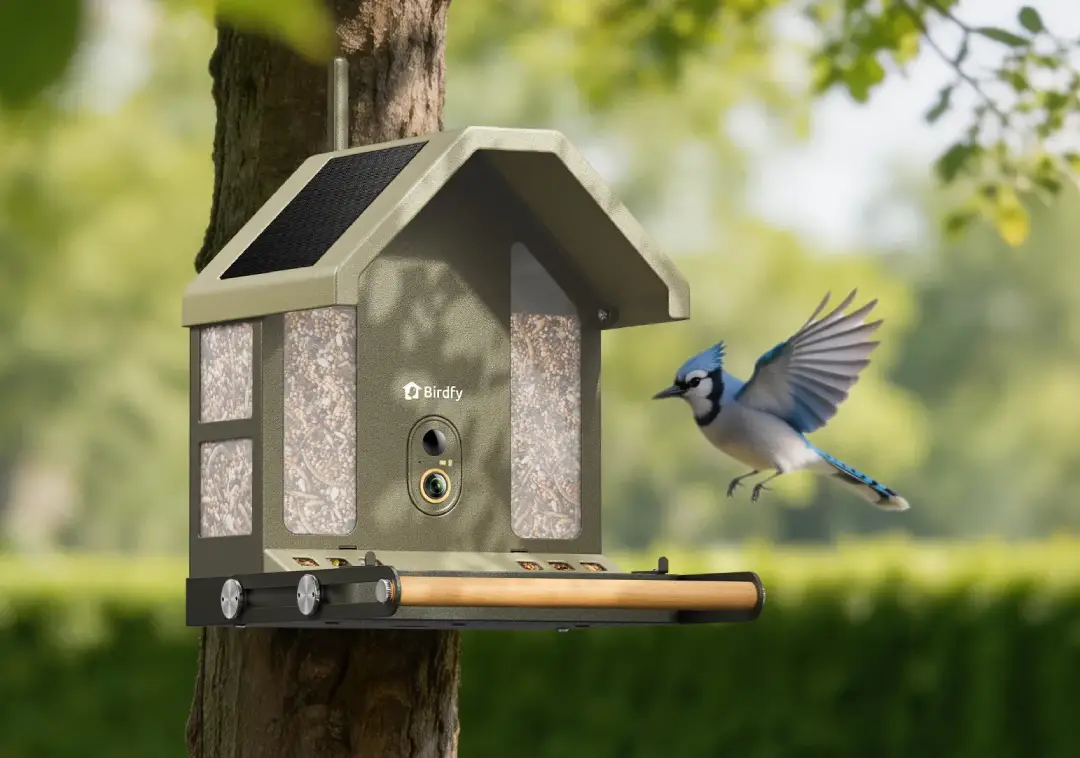
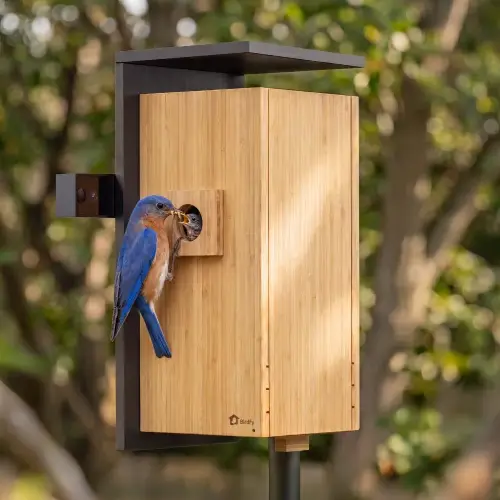
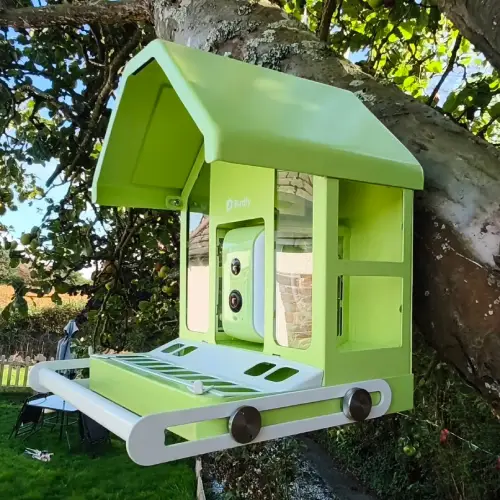
The range is wide. Feeders start at $79.99 for the basic Rookie and run up to $359.99 for the triple-lens Feeder 2 Duo. There are also hummingbird feeders, nest boxes, a bird bath and a standalone camera.
Note on pricing: almost every Birdfy product shows a permanent crossed-out higher price next to the real one. Treat that strikethrough as marketing rather than a genuine discount, because it never seems to go away.
The first paywall: AI is a hardware choice, not an app choice
This is the part to understand before anything else.
Most Birdfy feeders are sold in two versions at two different prices. One is labelled AI Lifetime Free, which includes bird recognition forever with no ongoing payment. The other is labelled AI by Subscription, which gives you a 7-day trial and then charges $4.99 a month, $49.99 a year, or $69.99 once for lifetime access.
The difference at checkout is roughly $20. If you buy the cheaper variant to save that $20 and then decide you want AI identification, you are into a subscription that costs more than the saving within five months. And each subscription covers a single device, so a second feeder means a second subscription.
Two feeders sitting side by side at similar prices, where one quietly includes a feature forever and the other does not, is the single most important thing a buyer needs to know about this brand. Check the variant label carefully.
The second paywall: Birdfy Membership
Separately from the hardware choice, there is a Birdfy Membership with three tiers. This is where things get murky.
Feature
Free
Plus and Pro
AI bird recognition
10 per day
Unlimited
Video retention
30 days
60 days (Plus) / 90 days (Pro)
Clip length
20 seconds
30 seconds (Plus) / 60 seconds (Pro)
Collection storage
5GB
20GB (Plus) / 100GB (Pro)
Devices covered
Not included
2 (Plus) / 10 (Pro)
Product discount
None
15% (Plus) / 20% (Pro)
The free tier caps AI bird recognition at 10 identifications per day. Birdfy's own support documentation confirms this, stating that AI can identify birds in up to 10 moment videos each day.
On a busy feeder, 10 is not many. A feeder in a good spot can log dozens of visits before lunch.
Plus pricing is inconsistent on Birdfy's own properties. Their store lists a one-year Plus membership at $79.99 while their support documentation shows $69.99 a year in a worked example. Pro tier pricing is not published anywhere that could be found, which is unusual and worth noting.
How the two paywalls interact, and why that matters
Here is the genuinely unresolved question: if you bought the AI Lifetime Free hardware, are you exempt from the 10-per-day membership cap, or does the cap still apply?
Birdfy never states this plainly anywhere. And there is at least one customer report, on a Sam's Club listing, of AI recognition stopping and demanding payment despite having been advertised as lifetime. That suggests the ambiguity is affecting real buyers.
If you are buying specifically for unlimited bird identification, ask Birdfy support this exact question in writing before ordering, and keep the reply.
What is genuinely free forever, to be fair to them: live streaming, motion detection and recording, push notifications, 30 days of rolling cloud storage, 5GB of permanent saved clips, and those 10 daily identifications. Birdfy's own blog says the core functions are completely free, which is defensible right up until you decide that species identification is a core function of an AI bird feeder.
Which model to actually buy
The lineup is confusing because the naming does not track the specs. Some highlights:
Feeder Rookie at $79.99 is the cheapest entry point
The standard Feeder is $109.99 bare, or $129.99 bundled with the solar panel. Buying solar separately costs $39.99, so the bundle saves you $20
Feeder 2 Pro at $239.99 has dual lenses with motion tracking and includes solar
Feeder Metal 2 4K at $259.99 is the only model that is actually 4K
Feeder 2 Duo at $359.99 is the triple-lens flagship
Worth repeating that fourth point. The Feeder 2 family costs more than several other models but tops out at 2K, not 4K, despite the naming implying a newer generation. Only the Metal 2 carries 4K.
On solar: treat it as mandatory rather than optional. Owner reports consistently describe battery-only operation lasting around a week under heavy bird traffic, against a claimed three months at ten videos per day. With solar attached, most people report it staying topped up.
The storage limitation people miss
Birdfy feeders do not support local storage. This is stated plainly on their own product page, and it is worth quoting because a third-party review currently claims the opposite.
Birdfy's words: while the camera has a MicroSD card slot, it is intended solely for manufacturer testing during production, and the feeder does not support MicroSD card storage or playback.
So everything runs through Birdfy's cloud. Your footage, your history, your saved clips. If the company changes its plans, raises prices or stops operating, there is no local fallback. That is a real long-term consideration on a product you are buying partly to build up a record of what visits your garden.
What owners actually complain about
Ratings sit around 4.0 out of 5 on Trustpilot across 781 reviews and roughly the same on the App Store across about 2,900 ratings. But a Sam's Club listing for the Feeder 2 Pro shows 4.1 out of 5 with around 20% of reviews at one or two stars. That barbell shape tells the real story: most people are happy, and a meaningful minority got a unit that did not work properly.
The recurring themes, strongest first:
WiFi. All Birdfy cameras support 2.4GHz networks only. Birdfy's support site confirms this, but owners report it is not clearly stated on the packaging. Mesh systems are a particular problem, with one reviewer describing connecting to an Eero network as nearly impossible
Battery and solar charging. Charging capping at 85%, solar panels arriving dead, solar struggling to keep up during peak season
AI accuracy. One detailed test logged 38 correct identifications, 14 unknowns and 2 misidentifications across 47 visits, and noted it could not identify crows. Another reviewer had squirrels identified as sparrows. One App Store review claims 80% of highlights are wrong. Against a marketed 6,000-plus species, real-world accuracy looks closer to 70%
Notification spam. Reports of 50 or more notifications a day with no daily digest option. Birdfy's own FAQ acknowledges false alarms triggered by temperature changes, light shifts and air currents
Slow motion trigger, so birds often leave before recording properly starts
Squirrels chewing through charging cables, made worse because the base Feeder is pole-mount only with no hanging option
Shipping delays, which is the single most common Trustpilot complaint
Warranty and returns
The warranty is two years and covers the device and all add-ons, which means the solar panel and battery are included rather than carved out with a shorter term. That is better than a lot of outdoor electronics offer.
Exclusions are the usual: misuse, dropping, crushing, unauthorised disassembly, cosmetic damage and normal wear. One exclusion deserves a flag though, which is liquid immersion. On a product that lives outside in the rain, the line between water ingress being a defect and being immersion is a judgement call, and Birdfy makes it.
Returns are advertised as 30 days money back. The full US policy text is not publicly accessible, but their UK policy requires approval before returning, shipping back within 10 days of receiving instructions, and returning all cords, adapters and original packaging. The buyer pays return shipping unless the item is defective. No restocking fee is mentioned. Assume similar terms apply in the US but confirm before ordering.
Birdfy or Bird Buddy?
Bird Buddy is the main alternative and the comparison is closer than the price difference suggests.
Birdfy's real structural advantage is the one covered at the top of this review: you can buy AI recognition outright and never pay again. Bird Buddy's Premium features run roughly $49 a year or $9 a month with no equivalent buy-once option. Over five years that difference is substantial.
Against that, reviewers consistently rate Bird Buddy's app and AI as more polished. Bird Buddy claims fewer species, around 1,000 against Birdfy's 6,000-plus, but is described as more reliably accurate on the common garden birds you will actually see. A bigger number attached to a less reliable engine is not obviously the better deal.
One practical difference: Bird Buddy hangs, while the base Birdfy Feeder is pole-mount only. If squirrels are your main problem, a hanging feeder with a baffle is easier to defend.
FAQs
Does Birdfy require a subscription?
Not necessarily, but you have to choose correctly at purchase. Feeders are sold in an AI Lifetime Free variant and an AI by Subscription variant, roughly $20 apart. The subscription version costs $4.99 a month, $49.99 a year or $69.99 once. Separately, the free membership tier caps AI identifications at 10 per day.
How much do Birdfy feeders cost?
From $79.99 for the Rookie up to $359.99 for the triple-lens Feeder 2 Duo. The popular Feeder 2 Pro is $239.99 with solar included. Prices captured at time of writing.
Do you need the solar panel?
Practically, yes. Battery-only operation lasts around a week under heavy traffic despite longer claims. The solar bundle costs $20 more than the bare feeder, against $39.99 to buy the panel separately.
Can Birdfy work without WiFi or store to an SD card?
No. Birdfy feeders support 2.4GHz WiFi only and do not support MicroSD storage. The card slot exists but Birdfy states it is for factory testing only. Everything depends on their cloud.
How accurate is the bird identification?
Good but not excellent. Independent testing suggests roughly 70% real-world accuracy, with common failure cases including crows and squirrels being misidentified as birds.
What is the warranty?
Two years covering the device and add-ons including the solar panel and battery. Liquid immersion, misuse and cosmetic damage are excluded.
Verdict
Birdfy makes a good product wrapped in a confusing commercial structure. The cameras work, the footage is genuinely lovely, the two-year warranty covering the solar panel is better than most, and the ability to buy AI outright is a real advantage over Bird Buddy.
Buy it with three things settled first. Pick the AI Lifetime Free variant, not the subscription one. Get the solar bundle rather than adding the panel later. And check your WiFi is 2.4GHz and reachable at the feeder before you order, because that is what generates more complaints than anything else.
Do that and it is a solid buy. Skip any of the three and it becomes the product people write angry reviews about.